JP Nagar, Bangalore-78
+91 89046 66442 | 88822 61858
Morning: 8:00 AM – 9:00 AM | Evening: 5:30 PM – 9:00 PM
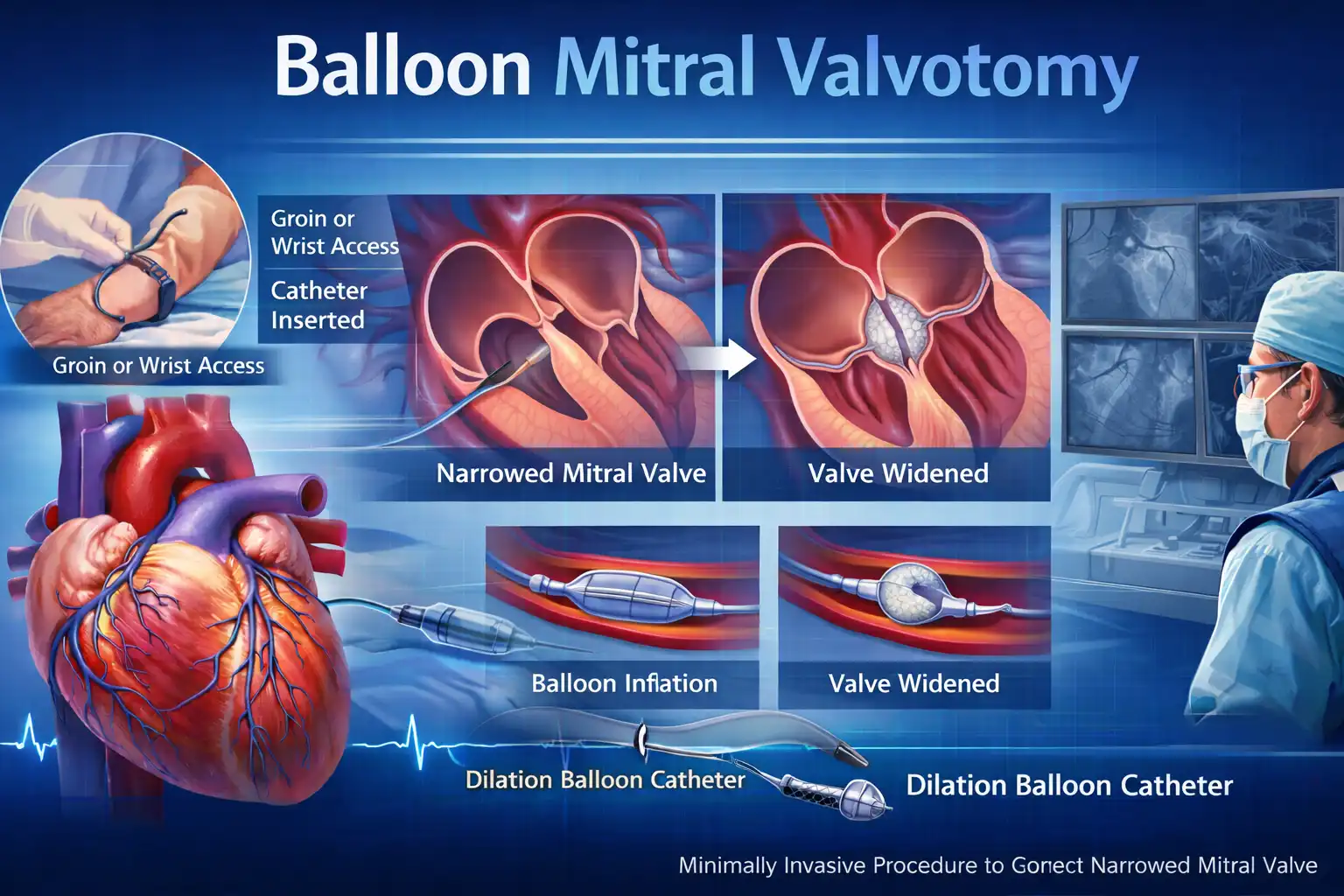
Mitral valve stenosis is a serious heart condition where the mitral valve in the heart becomes narrowed, restricting blood flow from the left atrium to the left ventricle. This condition can lead to severe complications such as heart failure, arrhythmias, and reduced quality of life. Balloon mitral valvotomy (BMV) is an advanced, minimally invasive procedure that can help treat mitral valve stenosis effectively by widening the narrowed valve, restoring normal blood flow, and improving heart function.
Balloon mitral valvotomy is a catheter-based procedure used to treat mitral valve stenosis. During this procedure, a balloon is inserted through a catheter and carefully inflated across the narrowed mitral valve. The inflation of the balloon widens the valve, allowing blood to flow more freely through the heart. This procedure is highly effective for patients who suffer from severe mitral valve stenosis but are not ideal candidates for traditional open-heart surgery.
Balloon mitral valvotomy is a preferred treatment option for many patients with mitral valve stenosis because it offers several advantages:
Minimally Invasive: The procedure is performed through small incisions and does not require opening the chest, meaning patients experience less pain, fewer complications, and faster recovery times.
Effective and Long-Lasting Results: Balloon mitral valvotomy has been shown to provide significant relief from symptoms and long-term improvements in heart function, particularly in patients with non-calcified mitral valves.
Avoidance of Surgery: For many patients, balloon mitral valvotomy can be a viable alternative to more invasive surgery, offering a safe solution without the need for a prolonged hospital stay or a lengthy recovery period.
Balloon mitral valvotomy is typically recommended for patients with:
Severe Mitral Valve Stenosis: When the mitral valve is significantly narrowed, causing symptoms like shortness of breath, fatigue, chest pain, or swelling in the legs.
Heart Failure: When mitral valve stenosis is causing the heart to work harder, leading to symptoms of heart failure.
Atrial Fibrillation: When the narrowing of the mitral valve increases the risk of arrhythmias, particularly atrial fibrillation.
High Surgical Risk: When patients are not good candidates for traditional open-heart surgery due to age, other health conditions, or other risk factors.
If you are experiencing symptoms such as fatigue, shortness of breath, or irregular heartbeats due to mitral valve stenosis, balloon mitral valvotomy could be the right option for you to restore normal heart function.
Balloon mitral valvotomy is performed in a catheterization lab, a sterile environment where the procedure is done under local anesthesia and mild sedation. A catheter is inserted through a small incision, usually in the groin, and guided through the blood vessels to the heart. Once the catheter reaches the mitral valve, a balloon attached to the catheter is positioned across the narrowed valve. The balloon is then inflated to widen the valve, allowing for better blood flow.
Once the valve has been dilated, the balloon is deflated and removed, and the catheter is withdrawn. The procedure typically takes 30 to 60 minutes, and most patients are able to return home within a day or two.
Benefits of Balloon Mitral Valvotomy
Improved Blood Flow: By widening the narrowed mitral valve, balloon mitral valvotomy restores normal blood flow to the heart, reducing symptoms such as shortness of breath and fatigue.
Minimally Invasive: The procedure requires only small incisions and no chest opening, leading to less pain, a lower risk of complications, and a quicker recovery compared to traditional surgery.
Long-Term Relief: Balloon mitral valvotomy provides lasting relief for many patients, improving heart function and quality of life by addressing the underlying cause of mitral valve stenosis.
Faster Recovery: With a shorter recovery time than surgery, patients can return to their normal activities within a few days, with fewer hospital visits and less disruption to their lives.
During the procedure, you will be given local anesthesia to numb the area of catheter insertion, and mild sedation to help you relax. You will be awake during the procedure but will not feel any pain. The procedure typically takes about 30 to 60 minutes. Afterward, you will be monitored for a few hours to ensure there are no complications. Most patients are able to go home the same day or the next day.
After the procedure, you may experience some mild soreness or bruising at the insertion site, but this is typically short-lived. You will be given post-procedure instructions to help you recover fully. Most patients can return to normal activities within a few days, though you will need to avoid strenuous activity for a few weeks.
Balloon mitral valvotomy is a highly effective and minimally invasive solution for patients with mitral valve stenosis. By restoring normal blood flow and relieving symptoms, this procedure helps improve heart function and quality of life. For patients who are not candidates for surgery or prefer a less invasive approach, balloon mitral valvotomy offers a life-changing treatment with minimal risk and a quick recovery.
If you are experiencing symptoms of mitral valve stenosis or have been diagnosed with this condition, don’t wait. Schedule a consultation today to learn more about balloon mitral valvotomy and how it can help restore your heart health. Call us at +91 8904666442 to book your appointment.



Consultant Interventional Cardiologist
MBBS, MD, DM, FICC, FSCAI (USA)