
JP Nagar, Bangalore-78
+91 89046 66442 | 88822 61858
Morning: 8:00 AM – 9:00 AM | Evening: 5:30 PM – 9:00 PM
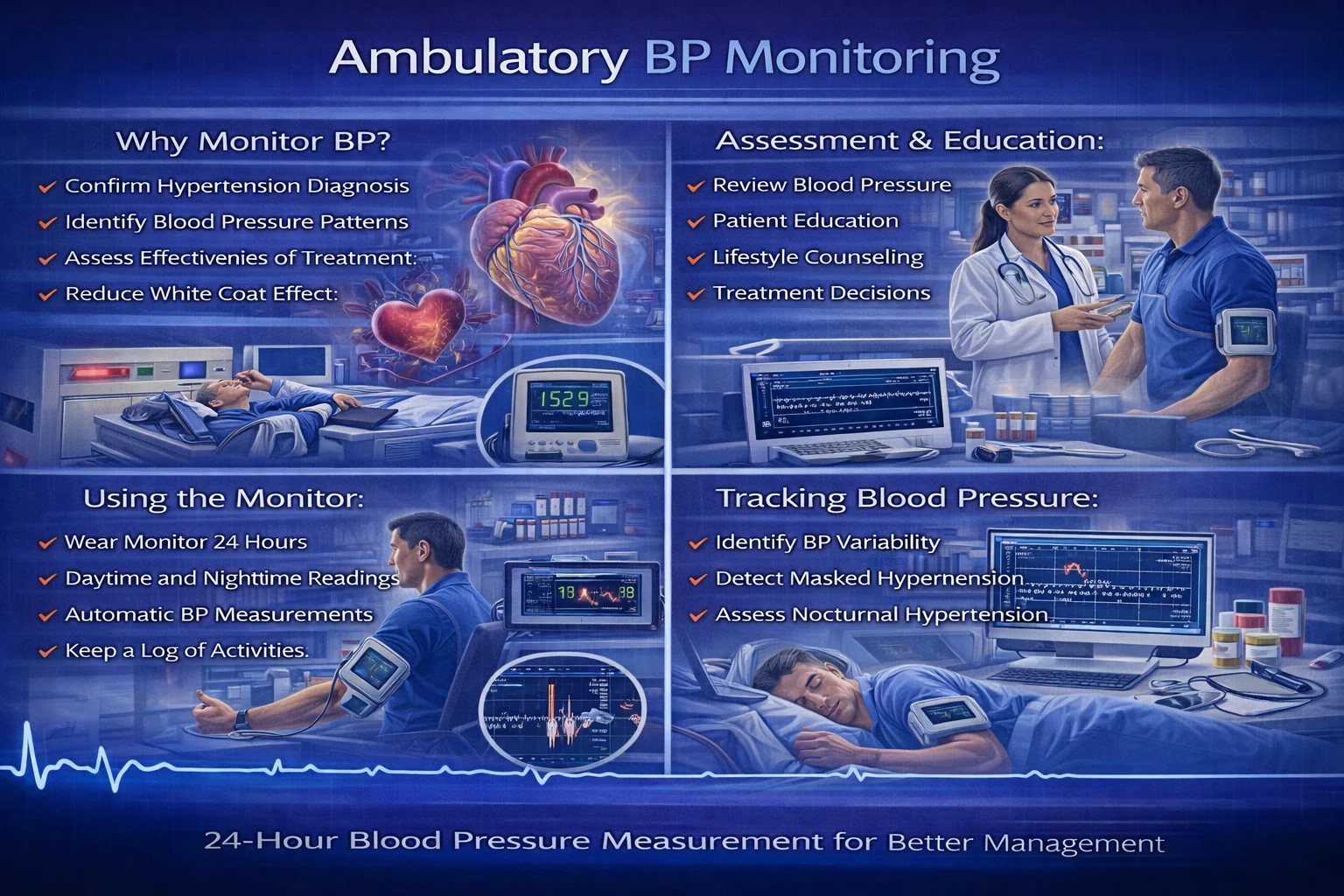
Ambulatory blood pressure (BP) monitoring is a diagnostic tool that provides an accurate, long-term measure of blood pressure by monitoring it continuously throughout the day and night. This method involves wearing a small, portable device that automatically takes blood pressure readings at regular intervals over a 24-hour period. Ambulatory BP monitoring helps doctors assess your blood pressure more accurately, identify hypertension, and track fluctuations that might not be detected during a standard office visit.
Ambulatory BP monitoring involves wearing a blood pressure cuff attached to a portable machine that records blood pressure readings over a 24-hour period. This method is far more comprehensive than traditional blood pressure checks because it measures BP during various activities, including sleep and daily routines. The device automatically inflates the cuff at set intervals (usually every 15-30 minutes) during the day and less frequently at night. The results provide a more accurate picture of how your blood pressure behaves in real-life conditions.
Ambulatory BP monitoring is an important tool for diagnosing and managing hypertension for several reasons:
Accurate Diagnosis: Blood pressure can fluctuate throughout the day, and readings taken in a clinical setting may not reflect true BP levels. Ambulatory monitoring provides a more accurate and representative measurement by tracking BP over a full day.
Identifying White Coat Hypertension: Some individuals experience high blood pressure in a medical setting due to anxiety (white coat syndrome). Ambulatory monitoring helps distinguish this from true hypertension.
Assessing Nocturnal Blood Pressure: Blood pressure naturally drops at night for most people. Ambulatory monitoring can help identify patients whose blood pressure does not decrease during sleep, which is a risk factor for heart disease and stroke.
Monitoring Treatment Effectiveness: For patients already on medication for hypertension, ambulatory monitoring helps track the effectiveness of the treatment and make necessary adjustments.
Ambulatory BP monitoring is recommended in various situations, including:
Suspected Hypertension: If blood pressure readings in a clinic are high but there are doubts about a diagnosis, ambulatory monitoring helps confirm whether the patient has persistent hypertension.
White Coat Hypertension: If your doctor suspects that your blood pressure is elevated only in a clinical setting, this monitoring can help determine if you have normal BP outside of the doctor’s office.
Resistant Hypertension: If your blood pressure remains high despite treatment, ambulatory BP monitoring helps assess fluctuations and guides treatment adjustments.
Sleep Apnea: People with sleep apnea may have elevated BP at night, and ambulatory monitoring can help detect this pattern.
Hypertension with Organ Damage: In patients with a history of organ damage (e.g., heart, kidney, or eye problems) due to high blood pressure, continuous monitoring helps manage the condition effectively.
Ambulatory BP monitoring involves the following process:
Initial Consultation: A healthcare provider assesses your blood pressure and determines the need for ambulatory monitoring. If indicated, the doctor will explain how the device works and schedule a 24-hour monitoring period.
Fitting the Device: You will be fitted with a small, portable BP monitor that includes a cuff placed on your upper arm. The cuff is connected to a small recording device that can be worn around your waist or carried in a pouch.
Measurement Schedule: The device automatically inflates the cuff to measure your blood pressure at preset intervals. This may occur every 15-30 minutes during the day and less frequently at night.
Data Recording: The device stores the readings in its memory, and the healthcare provider will review the data once the monitoring period is completed.
Analysis of Results: The results provide insights into your average blood pressure over the 24-hour period, daytime versus nighttime blood pressure, and the presence of any unusual fluctuations. The doctor will analyze the data to determine the best course of action.
Ambulatory BP monitoring provides several benefits:
More Accurate Results: This method offers a better understanding of your blood pressure outside of a clinical setting, offering a more accurate diagnosis and treatment plan.
Helps Identify Patterns: By monitoring BP throughout the day and night, healthcare providers can identify patterns that might be missed during a single clinic visit.
Improves Treatment Decisions: By seeing how your BP fluctuates with daily activities, doctors can fine-tune medication dosages and adjust lifestyle recommendations to better manage hypertension.
Non-Invasive and Comfortable: The monitoring process is non-invasive and relatively comfortable. You can carry on with normal activities while wearing the device, though you’ll need to limit certain movements, such as heavy lifting, that may interfere with the readings.
While ambulatory BP monitoring is a valuable diagnostic tool, there are some factors to consider:
Discomfort: The cuff may feel tight during inflation, and the device may be somewhat bulky to wear for 24 hours.
Interference with Sleep: The frequent measurements taken at night may disrupt your sleep, especially if the cuff inflates at night.
Device Limitations: In some cases, the device may not capture readings accurately if the patient moves excessively or if the cuff is improperly placed.
The results of ambulatory BP monitoring are analyzed based on key data:
Average 24-Hour BP: The overall average blood pressure over 24 hours.
Daytime and Nighttime BP: The comparison between BP during waking hours and during sleep. A lack of a nighttime BP dip may indicate higher cardiovascular risk.
Hypertension Load: The percentage of time during the monitoring period that blood pressure exceeds normal thresholds, providing insights into how often BP is elevated.
Morning Surge: Some individuals experience a rise in blood pressure in the morning. A significant surge may increase the risk of heart attack or stroke.
Based on the results of ambulatory BP monitoring, treatment may involve:
Medication Adjustments: If BP is consistently high, adjustments to medications such as antihypertensive drugs may be necessary.
Lifestyle Recommendations: Lifestyle changes like improving diet, increasing physical activity, reducing stress, and managing weight may be recommended to help control BP.
Monitoring for Sleep Apnea: If elevated nighttime BP is detected, further evaluation for sleep apnea may be necessary.
If you are concerned about high blood pressure or experiencing symptoms of hypertension, an ambulatory BP monitoring test can provide accurate insights into your heart health. Contact us today at +91 8904666442 to schedule your 24-hour BP monitoring and take control of your cardiovascular health.



Consultant Interventional Cardiologist
MBBS, MD, DM, FICC, FSCAI (USA)