JP Nagar, Bangalore-78
+91 89046 66442 | 88822 61858
Morning: 8:00 AM – 9:00 AM | Evening: 5:30 PM – 9:00 PM
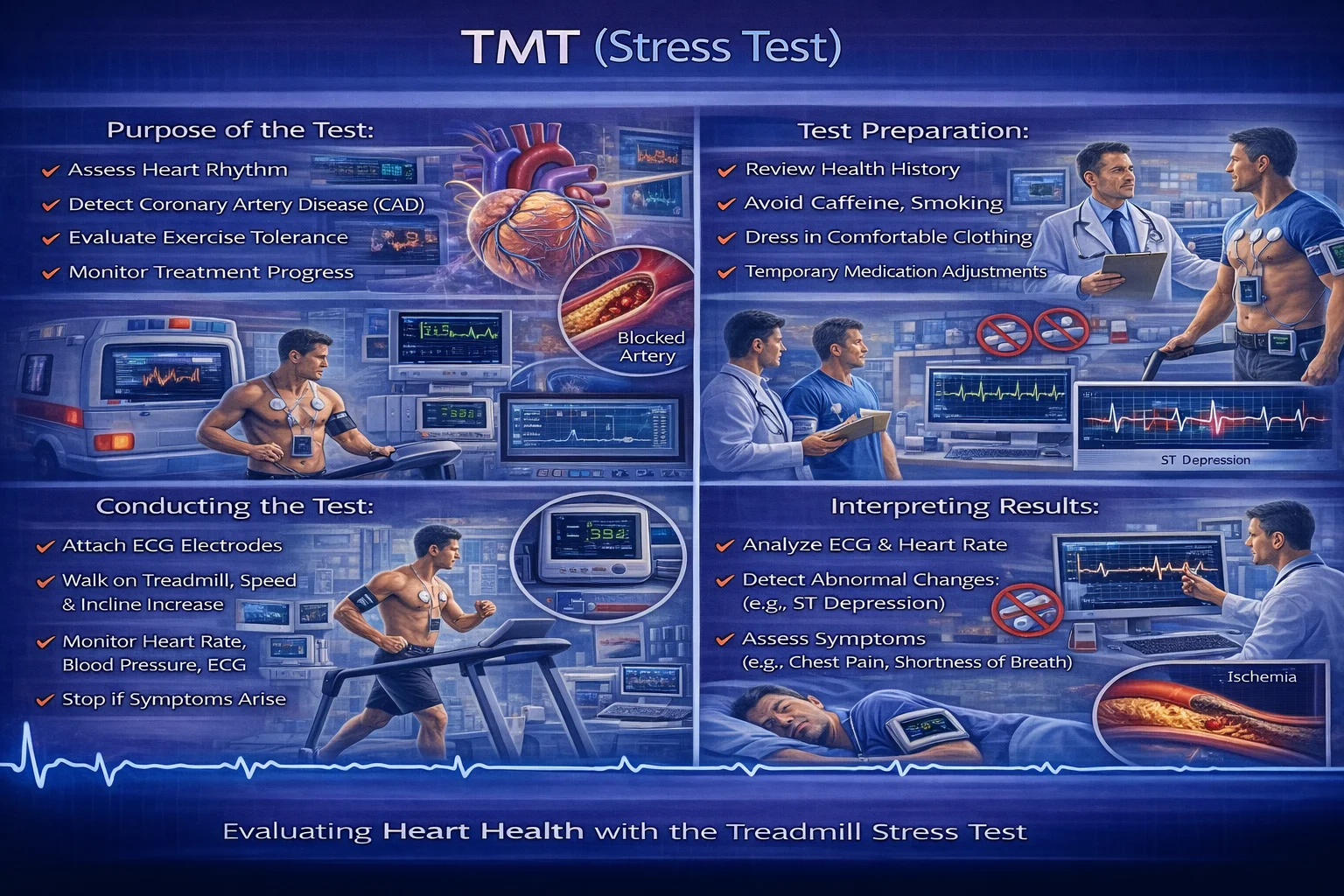
A Treadmill Test (TMT), also known as a stress test, is a diagnostic procedure that helps evaluate the heart’s function during physical exertion. The test involves walking on a treadmill while being monitored by an ECG to assess how well the heart handles physical stress. The TMT is commonly used to detect coronary artery disease, evaluate exercise tolerance, and identify arrhythmias that may not be apparent during a resting ECG. It is an essential tool for diagnosing heart problems and assessing cardiovascular health.
The TMT (Treadmill Test) or stress test is a non-invasive procedure used to assess how well your heart performs under physical stress. During the test, you walk on a treadmill that gradually increases in speed and incline while your heart rate, blood pressure, and ECG are continuously monitored. The goal is to evaluate how the heart responds to exercise and identify any abnormalities in heart function, such as irregular heartbeats (arrhythmias) or signs of insufficient blood flow due to blockages in the coronary arteries.
TMT is an important tool for diagnosing heart disease and assessing cardiovascular health for several reasons:
Diagnosing Coronary Artery Disease (CAD): The test helps identify blockages or narrowed coronary arteries that may reduce blood flow to the heart muscle, leading to symptoms such as chest pain (angina).
Evaluating Exercise Tolerance: TMT assesses how well the heart tolerates exercise and identifies any limitations in heart function during physical exertion.
Identifying Arrhythmias: The test helps detect abnormal heart rhythms that may occur during physical activity but may not be detectable at rest.
Risk Assessment: It can help assess the risk of future heart problems, such as heart attacks or sudden cardiac events, based on how the heart performs during exercise.
Guiding Treatment Plans: The results of a TMT can help doctors develop a treatment plan for managing heart conditions, including lifestyle modifications, medications, or further procedures like angioplasty or surgery.
A TMT is typically recommended in the following situations:
Chest Pain or Discomfort: If you experience unexplained chest pain, tightness, or discomfort, a stress test helps determine if there are any blockages or heart issues.
Shortness of Breath: If you feel breathless during physical activity or even at rest, the test can help assess heart function and identify potential causes.
Exertional Fatigue: If you experience unusual fatigue or weakness during physical activity, a stress test can help evaluate your heart’s response to exercise.
History of Heart Disease: For individuals with a family history of heart disease, diabetes, or high blood pressure, the test helps assess the risk of developing coronary artery disease.
Monitoring Heart Disease: If you have a history of heart disease, the stress test helps monitor how well your heart is functioning and how it responds to physical stress, guiding treatment decisions.
Pre-Operative Evaluation: Before undergoing surgery, particularly for patients with known cardiovascular risk factors, a TMT can assess heart health and ensure that you are fit for the procedure.
During a TMT, the patient is asked to walk on a treadmill while being monitored for heart rate, blood pressure, and ECG readings. The test is typically performed as follows:
Preparation: The patient will be asked to wear comfortable clothing and shoes suitable for walking on the treadmill. Small electrodes will be attached to the chest to monitor the heart’s electrical activity via an ECG.
Starting the Test: The treadmill starts at a low speed with a slight incline. The speed and incline are gradually increased in stages, typically every 3 minutes, to raise the heart rate.
Monitoring: As you walk, the doctor or technician will monitor your heart rate, ECG, and blood pressure to observe how the heart responds to physical stress.
Ending the Test: The test is typically stopped once the target heart rate is reached, or if you experience symptoms such as chest pain, dizziness, or shortness of breath.
Post-Test Recovery: After the test, you will be monitored for a few minutes to ensure that your heart rate and blood pressure return to normal levels. The results will be analyzed to assess heart function during exercise.
TMT provides several important benefits for diagnosing and managing heart conditions:
Non-Invasive and Painless: The test is non-invasive and generally painless, making it a safe and easy way to assess heart health.
Accurate Assessment of Heart Function: The test provides real-time data on how the heart performs under physical stress, giving doctors valuable insights into heart health.
Detection of Hidden Heart Issues: TMT can detect heart problems, such as coronary artery disease and arrhythmias, that may not be apparent at rest.
Helps Guide Treatment: The results can help guide decisions on lifestyle changes, medication, or the need for further diagnostic tests or procedures.
Risk Stratification: TMT helps assess the severity of heart disease, identify high-risk patients, and determine the best course of treatment to prevent heart-related complications.
While the TMT is a generally safe procedure, there are a few considerations:
Possible Discomfort: Some patients may experience mild discomfort or fatigue during the test, particularly if they are not accustomed to exercise.
Symptoms During the Test: If chest pain, dizziness, or shortness of breath occurs during the test, it may indicate an underlying heart issue, and the test will be stopped immediately.
Not Suitable for Severe Conditions: TMT may not be appropriate for patients with severe heart conditions, including uncontrolled arrhythmias or heart failure, as the stress of the test could pose a risk. Your doctor will assess whether the test is appropriate based on your health history.
The results of the TMT are used to assess:
Heart Rate Response: How well the heart rate increases with physical exertion and whether it returns to normal after exercise.
ECG Abnormalities: Changes in the heart’s electrical activity, such as ST-segment depression or abnormal heart rhythms, that could indicate ischemia or a heart condition.
Blood Pressure Changes: An abnormal increase or failure of blood pressure to rise during the test can indicate underlying heart issues.
Exercise Capacity: The length of time a person can exercise and their maximum heart rate during the test helps assess the overall fitness and cardiovascular health.
If the TMT results suggest any abnormalities or heart issues, your doctor may recommend:
Further Testing: Additional tests, such as coronary angiography, echocardiograms, or cardiac CT scans, may be recommended for a more detailed evaluation.
Treatment Plan: Based on the results, treatment may involve lifestyle changes, medication adjustments, or procedures like angioplasty or coronary artery bypass grafting (CABG) if necessary.
If you are experiencing symptoms like chest pain, shortness of breath, or unexplained fatigue, or if you are at risk for heart disease, a TMT (stress test) can provide valuable insights into your heart health. Call us today at +91 8904666442 to schedule your stress test and take the first step towards maintaining a healthy heart.



Consultant Interventional Cardiologist
MBBS, MD, DM, FICC, FSCAI (USA)