
JP Nagar, Bangalore-78
+91 89046 66442 | 88822 61858
Morning: 8:00 AM – 9:00 AM | Evening: 5:30 PM – 9:00 PM
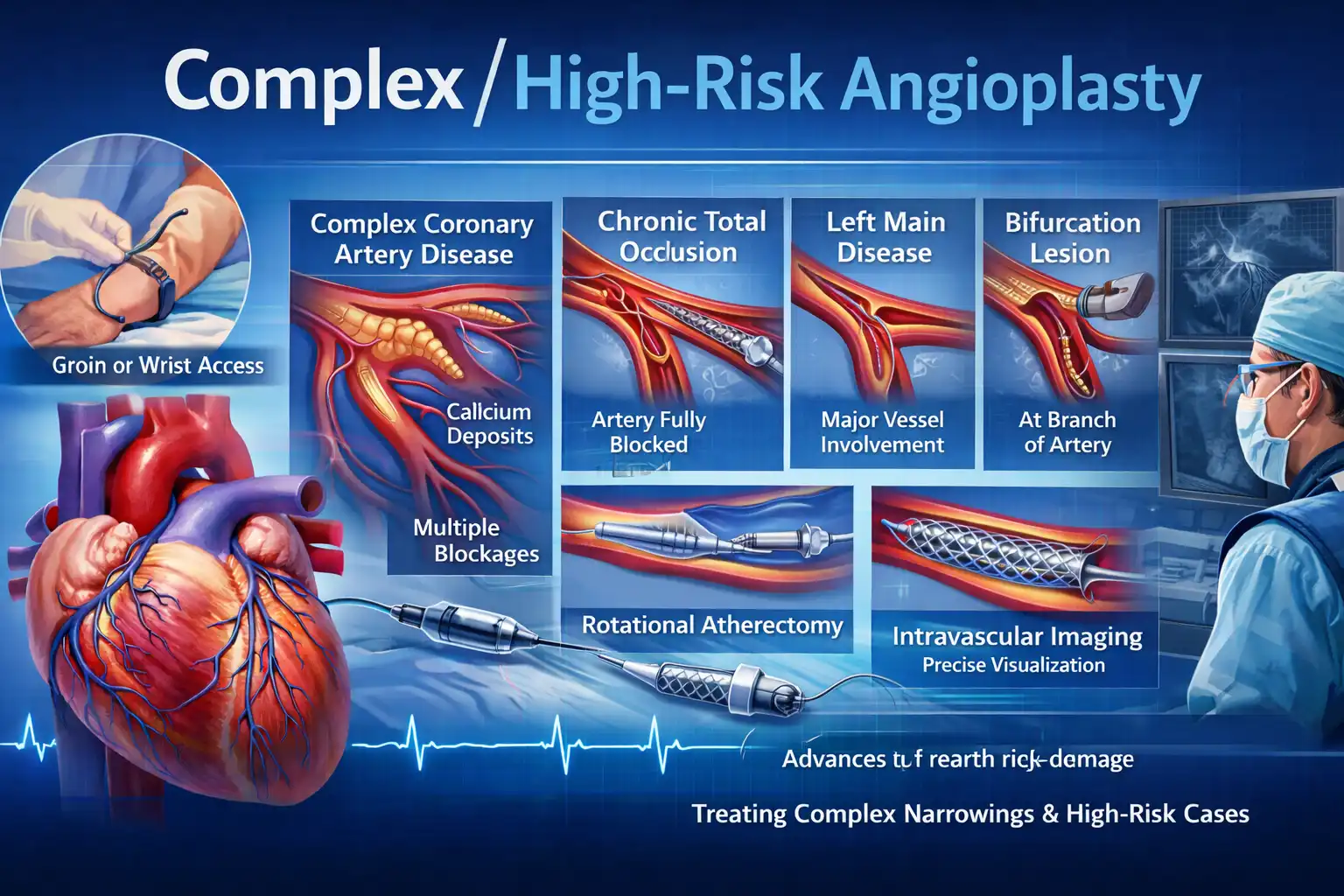
When it comes to coronary artery disease, not all blockages are straightforward. Some patients may have more complex or high-risk conditions, such as multiple blockages, blockages in difficult-to-reach arteries, or other heart complications that make traditional angioplasty procedures less effective. In these cases, complex or high-risk angioplasty becomes a vital treatment option. This advanced intervention requires specialized expertise and cutting-edge techniques to restore blood flow and improve heart health, even in the most challenging scenarios.
Complex or high-risk angioplasty refers to a set of advanced techniques used to treat coronary artery disease in patients with complicated heart conditions. This includes patients with multiple blockages, heavily calcified arteries, narrow vessels, or other underlying heart diseases that make traditional angioplasty more difficult. These procedures often require specialized tools, skills, and a customized approach to safely and effectively restore blood flow to the heart.
In complex angioplasty, doctors may use advanced imaging techniques, special devices like rotational atherectomy (for removing hard plaque), or drug-eluting stents to ensure that the artery stays open long-term.
For some patients, heart disease is not just a matter of a single blockage. It may involve multiple, more challenging blockages, or arteries in critical areas where traditional angioplasty might not work as well. In these cases, high-risk angioplasty is needed to:
Treat multiple blockages in different coronary arteries
Open arteries with severe calcification or long-standing blockages
Address complex heart disease cases, such as those in patients with diabetes, prior heart surgeries, or heart failure
These cases demand high levels of expertise and advanced equipment to reduce the risk of complications and improve the long-term health of the heart.
Complex angioplasty is recommended for patients with:
Multiple coronary artery blockages that are too complicated for standard procedures
Severe plaque buildup (calcified arteries) that requires specialized techniques to remove
Narrow arteries that are difficult to reach with conventional tools
Patients who have undergone previous heart procedures but still have significant blockages
High-risk factors such as diabetes, kidney disease, or heart failure that complicate standard treatments
If you have been diagnosed with complex coronary artery disease or face a high risk of complications, your cardiologist may recommend complex angioplasty as the best option to restore healthy blood flow to your heart.
The procedure begins with coronary angiography, where a catheter is inserted into the artery to assess the location and severity of the blockages. Depending on the complexity of the case, a variety of techniques may be employed:
Rotational Atherectomy: A specialized device that uses a rotating diamond-tipped burr to break up and remove hardened plaque in calcified arteries.
Intravascular Ultrasound (IVUS): Advanced imaging to provide real-time, detailed pictures of the inside of the artery, helping the cardiologist make informed decisions during the procedure.
Laser Angioplasty: A laser device is used to vaporize plaque and clear blockages in the artery.
Specialized Stenting: Drug-eluting stents may be used to keep the artery open after treatment, and sometimes more advanced or custom stents are required for high-risk cases.
This procedure is typically done under local anesthesia with sedation and can take longer than standard angioplasty due to the complexity of the case. The aim is to restore blood flow in the safest and most effective way possible.
Benefits of Complex / High-Risk Angioplasty
Restores Blood Flow: Despite the complexities, this procedure helps clear blockages and restore vital blood flow to the heart muscle, improving heart function and reducing symptoms.
Prevents Heart Attacks: By addressing high-risk blockages, complex angioplasty can significantly reduce the risk of heart attacks and other cardiovascular events.
Customized Approach: Each patient’s condition is unique, and complex angioplasty uses tailored techniques to address even the most challenging blockages.
Minimally Invasive: Unlike open-heart surgery, complex angioplasty is minimally invasive, which means smaller incisions, less pain, and a quicker recovery time.
The complex angioplasty procedure typically takes longer than standard angioplasty due to the challenging nature of the blockages. It is performed under local anesthesia with sedation, so you will be awake but relaxed during the procedure. After the procedure, you will be closely monitored in a recovery area for a few hours, and in some cases, overnight, depending on the complexity of your case.
You may experience some soreness or bruising at the insertion site, but most patients can return to their normal activities within a few days to a week, depending on their overall health and the extent of the procedure.
For patients with complex coronary artery disease, high-risk angioplasty offers a life-saving solution. It restores heart function, reduces symptoms, and prevents further complications that could lead to heart failure or other serious issues. This advanced procedure is an essential tool for tackling the most difficult heart disease cases and provides a path to recovery and improved heart health.
If you have been diagnosed with complex coronary artery disease or are experiencing symptoms such as chest pain or shortness of breath, don’t wait. Schedule a consultation to discuss complex angioplasty and how it can help restore your heart health. Call us at +91 8904666442 to book your appointment and take the first step toward a healthier heart.



Consultant Interventional Cardiologist
MBBS, MD, DM, FICC, FSCAI (USA)