JP Nagar, Bangalore-78
+91 89046 66442 | 88822 61858
Morning: 8:00 AM – 9:00 AM | Evening: 5:30 PM – 9:00 PM
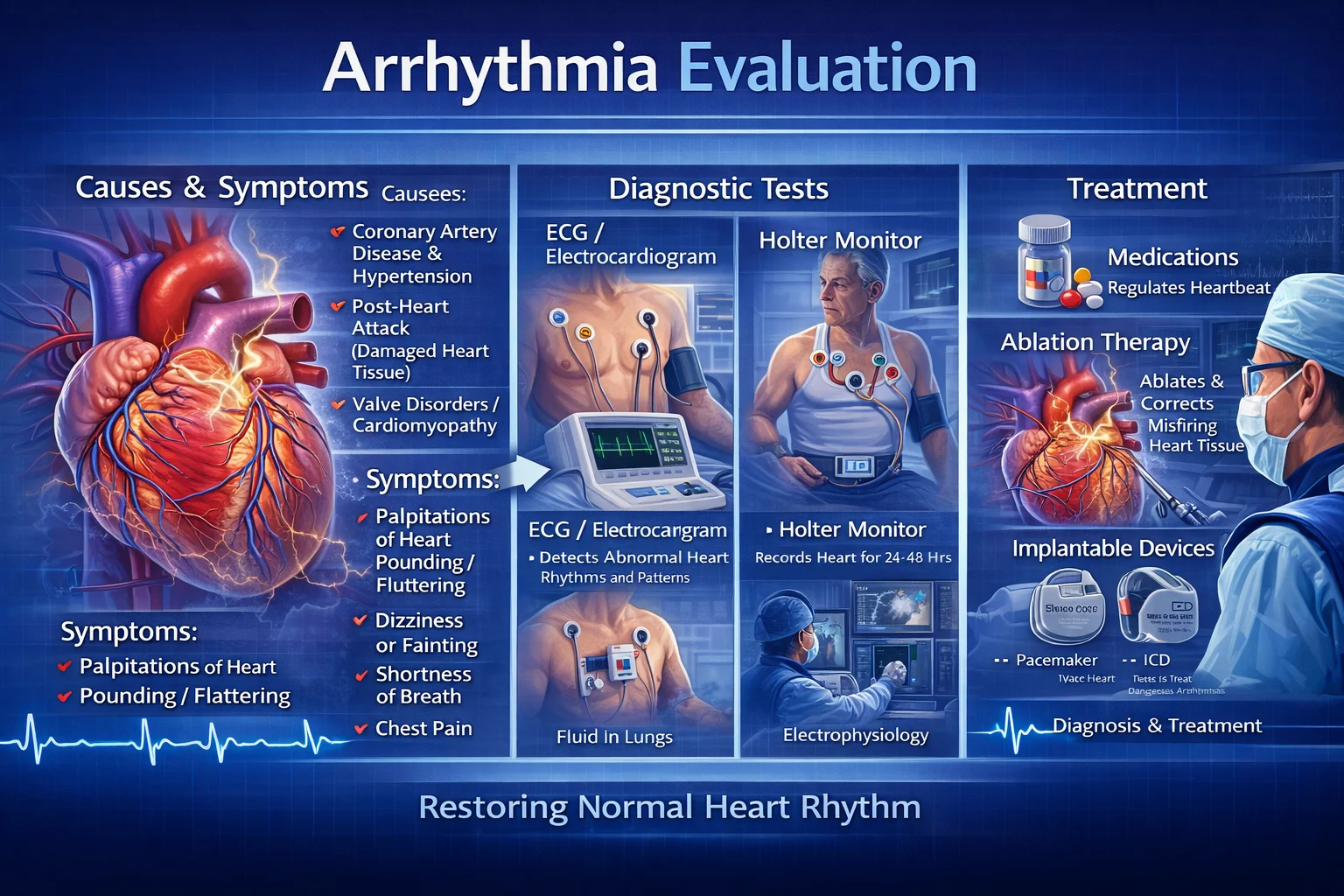
Arrhythmia refers to an irregular heartbeat, where the heart may beat too fast, too slow, or with an irregular rhythm. While some arrhythmias are harmless, others can lead to severe complications, including stroke or heart failure. An arrhythmia evaluation helps diagnose the underlying cause of abnormal heart rhythms, assess the severity of the condition, and determine the appropriate treatment. Early detection and proper management are crucial to maintaining heart health.
Arrhythmia is a condition where the electrical impulses in the heart that control the heartbeat become disrupted. This causes the heart to beat in an abnormal rhythm. Arrhythmias can occur in the atria (upper chambers of the heart) or the ventricles (lower chambers), and they can affect the speed, regularity, and coordination of the heartbeats.
There are different types of arrhythmias, including:
Tachycardia: A fast heart rate (above 100 beats per minute).
Bradycardia: A slow heart rate (below 60 beats per minute).
Atrial Fibrillation (AFib): An irregular, often rapid heart rhythm that can increase the risk of stroke.
Ventricular Fibrillation: A life-threatening arrhythmia where the ventricles quiver instead of contracting properly, leading to a loss of heart function.
An arrhythmia evaluation is crucial for several reasons:
Diagnosing Abnormal Heart Rhythms: Identifying irregularities in the heart’s rhythm is essential for determining the right treatment.
Preventing Complications: Some arrhythmias can increase the risk of stroke, heart failure, or even sudden cardiac arrest. Proper evaluation helps prevent such outcomes.
Assessing Treatment Options: Based on the type and severity of the arrhythmia, treatment may range from lifestyle changes to medications or even surgical interventions.
Monitoring Existing Conditions: If you have a history of heart disease, diabetes, or high blood pressure, arrhythmia evaluation can help manage and monitor any related heart conditions.
The symptoms of arrhythmia can vary depending on the type and severity of the irregular heart rhythm. Common signs include:
Palpitations: A feeling of fluttering, racing, or pounding heartbeats.
Dizziness or Lightheadedness: Often caused by poor blood flow due to irregular heart rhythms.
Shortness of Breath: Difficulty breathing during physical activity or at rest.
Fatigue: Unusual tiredness due to the heart’s inefficiency in pumping blood.
Chest Pain or Discomfort: A feeling of tightness or pressure in the chest, which could indicate a more serious arrhythmia or heart issue.
Fainting or Near Fainting: A result of inadequate blood flow to the brain caused by abnormal heart rhythms.
If you experience any of these symptoms, it’s important to seek medical attention to diagnose the cause and avoid potential complications.
Arrhythmia evaluation typically includes several diagnostic tests to identify the irregular heart rhythm and determine the underlying cause:
Electrocardiogram (ECG): A common test that records the electrical activity of the heart and detects abnormal heart rhythms.
Holter Monitor: A portable ECG device worn for 24–48 hours to record heart activity throughout the day and night.
Event Monitor: Similar to a Holter monitor, but used for longer periods (up to 30 days) to capture irregular heart rhythms.
Echocardiogram: An ultrasound that provides images of the heart, helping assess heart function and any structural issues that may contribute to arrhythmias.
Stress Test: A test that evaluates the heart’s response to physical exertion and identifies arrhythmias that may occur with exercise.
Electrophysiology Study (EPS): A procedure that involves inserting catheters into the heart to map the electrical signals and locate the source of arrhythmia.
The treatment for arrhythmia depends on its type, severity, and underlying cause. Common treatment options include:
Medications:
Antiarrhythmic Drugs: Help regulate the heart’s rhythm.
Beta-blockers: Reduce heart rate and help control irregular rhythms.
Blood Thinners: Reduce the risk of stroke in patients with certain types of arrhythmias (like atrial fibrillation).
Lifestyle Changes:
Exercise: Regular, moderate physical activity can help maintain a healthy heart rhythm.
Diet: Eating a heart-healthy diet rich in fruits, vegetables, and whole grains helps control blood pressure and cholesterol, both of which can affect heart rhythm.
Limiting Stimulants: Reducing alcohol, caffeine, and nicotine can prevent certain arrhythmias.
Medical Procedures:
Cardioversion: A procedure where an electric shock is delivered to the heart to restore normal rhythm, often used for atrial fibrillation or flutter.
Catheter Ablation: A procedure that uses heat or cold energy to destroy the small areas of the heart causing the arrhythmia.
Pacemaker: A small device implanted in the chest that helps regulate the heart’s electrical activity and ensure a normal rhythm.
Implantable Cardioverter Defibrillator (ICD): A device implanted in the chest to monitor the heart and deliver shocks if dangerous arrhythmias occur.
While not all arrhythmias are preventable, there are several ways to reduce the risk of developing irregular heart rhythms:
Healthy Lifestyle: Regular exercise, a balanced diet, and maintaining a healthy weight help prevent conditions like high blood pressure and heart disease, which can cause arrhythmias.
Limit Alcohol and Caffeine: Excessive consumption can trigger arrhythmias in some individuals.
Manage Stress: Practice stress-relieving techniques like yoga, meditation, and deep breathing to reduce the impact of stress on heart health.
Avoid Smoking: Smoking is a major risk factor for heart disease and arrhythmias.
If you’re experiencing symptoms like palpitations, dizziness, or shortness of breath, or have been diagnosed with an arrhythmia, it’s essential to schedule an evaluation. Early diagnosis and treatment can help manage the condition and prevent complications. Call us today at +91 8904666442 to book your appointment and get expert care for your heart health.



Consultant Interventional Cardiologist
MBBS, MD, DM, FICC, FSCAI (USA)