JP Nagar, Bangalore-78
+91 89046 66442 | 88822 61858
Morning: 8:00 AM – 9:00 AM | Evening: 5:30 PM – 9:00 PM
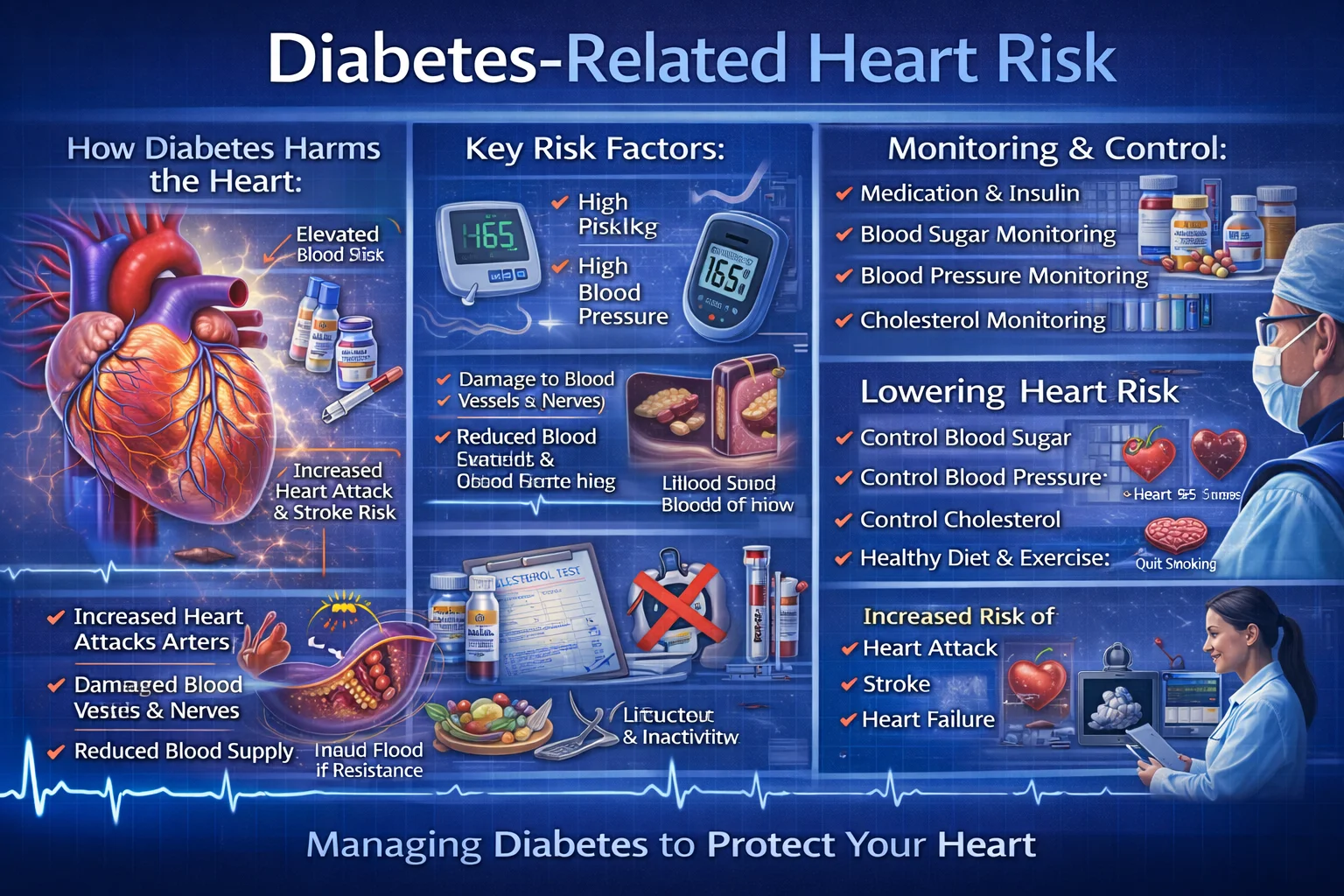
Diabetes is a chronic condition that affects how the body processes blood sugar (glucose). Over time, uncontrolled diabetes can increase the risk of heart disease by damaging the blood vessels and increasing the likelihood of atherosclerosis (plaque buildup in the arteries). The connection between diabetes and heart disease is significant, and managing both conditions is essential for maintaining overall health and reducing the risk of complications like heart attack and stroke.
Diabetes-related heart risk refers to the increased likelihood of developing cardiovascular disease as a result of having diabetes. High blood sugar levels can cause damage to the blood vessels and nerves, leading to poor circulation, higher blood pressure, and an increased risk of heart disease. People with diabetes are more likely to develop conditions such as coronary artery disease, heart attack, and heart failure.
There are two types of diabetes that contribute to heart risk:
Type 1 Diabetes: An autoimmune condition where the body does not produce insulin, leading to high blood sugar levels.
Type 2 Diabetes: A condition where the body becomes resistant to insulin or doesn’t produce enough insulin, causing high blood sugar levels.
When blood sugar levels are not well-controlled, they can contribute to various complications that increase the risk of heart disease:
Atherosclerosis: High blood sugar can damage the lining of the blood vessels, leading to plaque buildup and narrowing of the arteries, which can increase the risk of heart attack or stroke.
High Blood Pressure: Diabetes often leads to high blood pressure, which further strains the heart and blood vessels, increasing the risk of heart disease.
High Cholesterol: Diabetes can lead to abnormal cholesterol levels, with increased LDL (bad cholesterol) and decreased HDL (good cholesterol), further contributing to heart disease.
Kidney Disease: Diabetes-related kidney damage (diabetic nephropathy) can lead to fluid retention, increasing the risk of heart failure.
Stroke: The combination of high blood pressure, high cholesterol, and damaged blood vessels increases the likelihood of stroke in people with diabetes.
Several factors contribute to the risk of heart disease in individuals with diabetes:
Uncontrolled Blood Sugar: Consistently high blood sugar levels cause damage to blood vessels and increase heart disease risk.
Obesity: Excess weight, particularly around the abdomen, increases insulin resistance and the likelihood of developing diabetes and heart disease.
Sedentary Lifestyle: Lack of physical activity contributes to obesity, high blood pressure, and high blood sugar, all of which increase heart disease risk.
Smoking: Smoking accelerates the development of atherosclerosis and exacerbates diabetes-related heart risk.
Poor Diet: A diet high in refined carbohydrates, fats, and sugars can worsen blood sugar levels and cholesterol levels, increasing heart risk.
Family History: A family history of diabetes, heart disease, or both increases the likelihood of developing these conditions.
Although diabetes-related heart risk may not always show obvious symptoms, the following signs may indicate potential heart problems in people with diabetes:
Chest Pain or Discomfort: Pain or tightness in the chest, especially during physical activity or stress, could indicate heart disease.
Shortness of Breath: Difficulty breathing, especially during physical exertion, could be a sign of heart failure or other cardiovascular problems.
Fatigue: Feeling unusually tired or weak, even after minimal physical activity, due to poor heart function.
Swelling: Fluid retention in the legs, ankles, feet, or abdomen may signal heart failure.
Palpitations: Irregular or fast heartbeats that may indicate an arrhythmia or other heart problems.
If you experience any of these symptoms, it’s important to consult with a healthcare provider to assess your heart health.
Diagnosing diabetes-related heart risk typically involves a combination of tests to assess blood sugar levels, heart health, and overall cardiovascular risk:
Blood Tests:
Fasting Blood Sugar: Measures the level of glucose in your blood after fasting for at least 8 hours.
Hemoglobin A1c: Measures your average blood sugar levels over the past 2-3 months.
Cholesterol Panel: Measures your cholesterol levels, including LDL (bad cholesterol), HDL (good cholesterol), and triglycerides.
Electrocardiogram (ECG): A test that records the electrical activity of your heart and can detect heart rhythm abnormalities.
Echocardiogram: An ultrasound of the heart to evaluate its function, size, and blood flow.
Stress Test: Monitors the heart’s function under stress or physical activity to detect heart disease.
Kidney Function Tests: Diabetes can damage the kidneys, which in turn increases the risk of heart failure and other heart conditions.
Managing diabetes-related heart risk involves controlling both blood sugar and cardiovascular risk factors:
Medications:
Insulin: Essential for managing blood sugar in people with Type 1 and some people with Type 2 diabetes.
Oral Medications: Drugs such as metformin, sulfonylureas, and SGLT-2 inhibitors help control blood sugar levels in Type 2 diabetes.
Cholesterol-Lowering Drugs (Statins): Help lower LDL cholesterol and reduce the risk of heart disease.
Blood Pressure Medications: ACE inhibitors, beta-blockers, and diuretics help manage high blood pressure and protect the heart.
Aspirin: Low-dose aspirin may be prescribed to reduce the risk of heart attack and stroke.
Lifestyle Changes:
Healthy Diet: A heart-healthy diet rich in fruits, vegetables, whole grains, lean proteins, and healthy fats can help control both blood sugar and cholesterol levels.
Regular Exercise: Regular physical activity improves blood sugar control, lowers blood pressure, and helps manage weight.
Weight Management: Losing excess weight helps reduce insulin resistance and lowers the risk of cardiovascular disease.
Smoking Cessation: Quitting smoking improves heart health and reduces the risk of heart disease.
While some risk factors such as age and genetics cannot be controlled, adopting a heart-healthy lifestyle can significantly reduce the risk:
Monitor Blood Sugar Levels: Regularly check your blood glucose levels to keep them within target ranges.
Manage Cholesterol and Blood Pressure: Keep your cholesterol and blood pressure within recommended limits to reduce the strain on the heart.
Adopt a Healthy Diet: Follow a balanced, low-sodium, low-sugar diet to prevent diabetes and cardiovascular disease.
Stay Active: Engage in at least 30 minutes of moderate physical activity most days of the week.
Avoid Smoking: Smoking increases the risk of heart disease and worsens diabetes-related heart complications.
If you have diabetes or are concerned about your heart health, it’s important to schedule an evaluation to assess your risk for cardiovascular disease. Our specialists can help you manage both conditions and reduce the risk of serious complications. Call us at +91 8904666442 to book your appointment and take charge of your heart health.



Consultant Interventional Cardiologist
MBBS, MD, DM, FICC, FSCAI (USA)