JP Nagar, Bangalore-78
+91 89046 66442 | 88822 61858
Morning: 8:00 AM – 9:00 AM | Evening: 5:30 PM – 9:00 PM
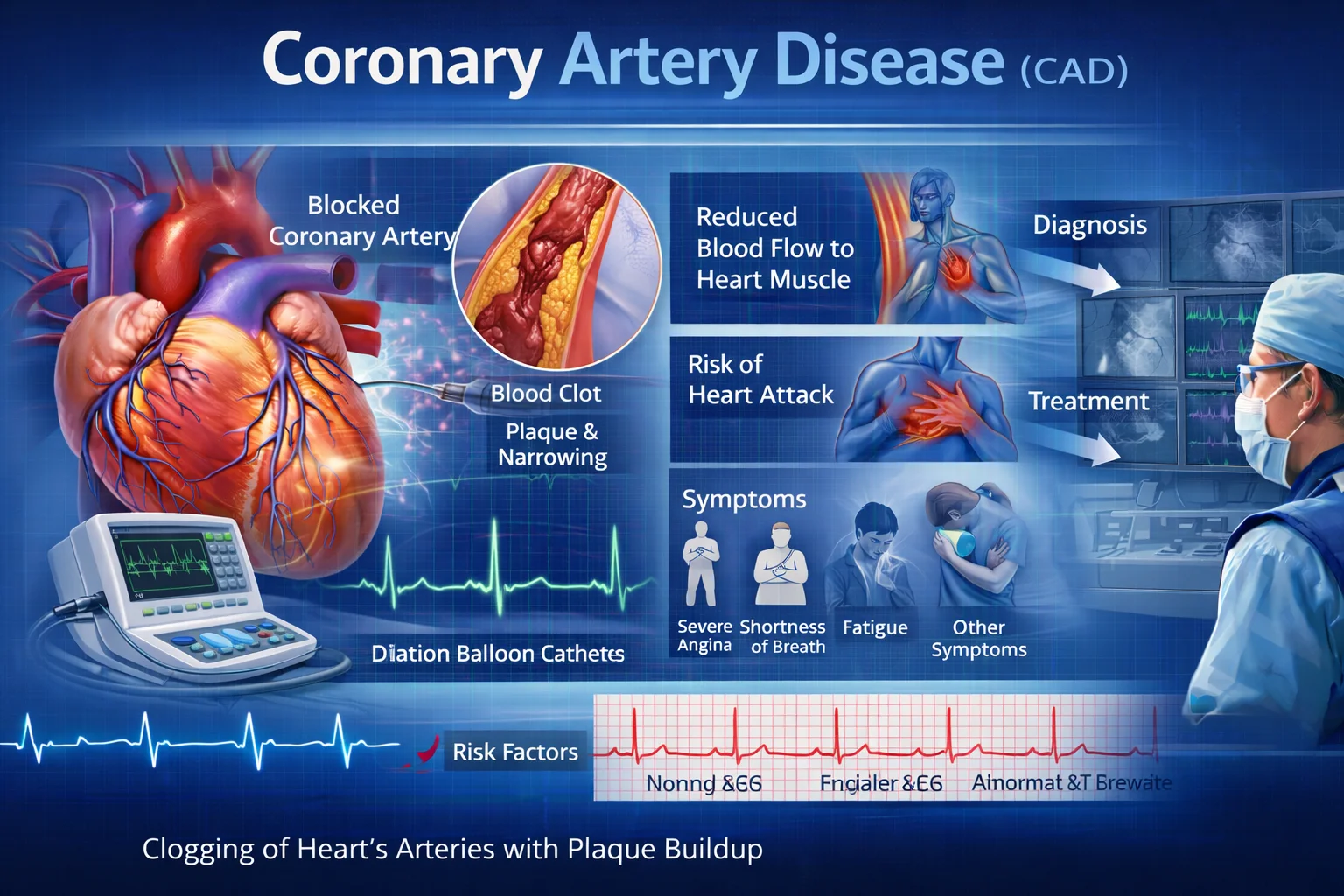
Coronary artery disease (CAD) is one of the most common and serious heart conditions, where the coronary arteries become narrowed or blocked due to the buildup of fatty deposits, also known as plaque. This condition restricts blood flow to the heart muscle, potentially leading to chest pain (angina), heart attacks, and even heart failure if left untreated. Early detection and appropriate management of CAD can significantly reduce the risk of severe complications and improve quality of life.
Coronary artery disease (CAD), also known as coronary heart disease (CHD), occurs when the coronary arteries, which supply blood and oxygen to the heart muscle, become narrowed or blocked by a buildup of plaque. Plaque consists of cholesterol, fatty substances, and other cellular debris. Over time, this plaque restricts the flow of blood to the heart, leading to a condition known as atherosclerosis.
As the disease progresses, the heart muscle may not receive enough oxygen-rich blood, resulting in chest pain, shortness of breath, and even more severe conditions such as a heart attack.
Without adequate blood flow, the heart muscle can become damaged, leading to:
Chest Pain (Angina): A common symptom of CAD where the heart is not receiving enough blood. This can feel like a tightness or pressure in the chest.
Heart Attack (Myocardial Infarction): If a coronary artery becomes completely blocked, it can cause a heart attack, leading to severe damage to the heart muscle.
Heart Failure: Long-term reduced blood flow can weaken the heart, resulting in heart failure, where the heart is unable to pump blood effectively to the rest of the body.
Arrhythmias: Abnormal heart rhythms can occur when the heart doesn’t receive enough oxygen, leading to potentially dangerous heartbeats.
Several risk factors can increase the likelihood of developing CAD:
High Cholesterol: Elevated levels of low-density lipoprotein (LDL) cholesterol can contribute to plaque buildup in the arteries.
Hypertension (High Blood Pressure): High blood pressure damages the arteries over time, making them more susceptible to plaque buildup.
Smoking: Smoking damages the blood vessels and accelerates the formation of plaque.
Diabetes: High blood sugar levels contribute to the development of atherosclerosis.
Family History: A family history of heart disease increases the risk of developing CAD.
Obesity: Excess weight increases the strain on the heart and is often linked to high cholesterol, hypertension, and diabetes.
Sedentary Lifestyle: Lack of physical activity contributes to obesity, high blood pressure, and high cholesterol.
Unhealthy Diet: Diets high in saturated fats, sugars, and sodium can lead to high cholesterol and high blood pressure.
Age and Gender: CAD is more common as people age. Men are generally at higher risk earlier in life, but the risk increases for women after menopause.
In the early stages, CAD may not show obvious symptoms. As the disease progresses, common signs include:
Chest Pain or Discomfort (Angina): Often triggered by physical activity or stress, this can feel like tightness or pressure in the chest.
Shortness of Breath: Difficulty breathing during physical activity or while at rest, due to reduced blood flow to the heart.
Fatigue: Feeling unusually tired, even with minimal physical activity, as the heart works harder to pump blood.
Lightheadedness or Dizziness: Caused by inadequate blood flow to the brain.
Palpitations: The sensation of a fast, fluttering, or pounding heartbeat.
If you experience any of these symptoms, it’s important to seek medical attention immediately to prevent the progression of the disease.
Diagnosing CAD typically involves a combination of the following tests:
Electrocardiogram (ECG): A test that records the electrical activity of the heart, helping identify abnormal rhythms or signs of previous heart attacks.
Stress Test: A test that evaluates the heart’s function under stress or physical exertion, identifying any limitations in blood flow.
Echocardiogram: An ultrasound of the heart to assess heart function, size, and blood flow.
Angiography: A specialized imaging technique used to visualize the coronary arteries and identify any blockages or narrowing.
Blood Tests: Tests to measure cholesterol levels, blood sugar, and other indicators of heart health.
There are several treatment options available to manage CAD, ranging from lifestyle changes and medications to more invasive interventions:
Lifestyle Changes: Adopting a heart-healthy diet, increasing physical activity, quitting smoking, and managing stress are the first line of defense against CAD.
Medications: Various medications may be prescribed, including cholesterol-lowering drugs (statins), blood pressure medications, blood thinners, and anti-angina medications.
Angioplasty and Stenting: If CAD is causing significant blockages, a procedure called angioplasty may be performed to widen the arteries, often with the placement of a stent to keep the artery open.
Coronary Artery Bypass Grafting (CABG): In severe cases, bypass surgery may be required to reroute blood flow around blocked arteries.
Lifestyle Modifications: Maintaining a healthy diet, regular exercise, weight management, and stress reduction are key components of treatment.
The best way to manage CAD is to prevent it. Key steps for preventing CAD include:
Healthy Diet: A diet low in saturated fats, cholesterol, and sodium, and rich in fruits, vegetables, whole grains, and lean proteins.
Regular Exercise: At least 30 minutes of moderate exercise on most days to maintain heart health and control weight.
Regular Health Screenings: Regular check-ups to monitor blood pressure, cholesterol, and blood sugar levels.
Quit Smoking: Smoking cessation significantly reduces the risk of developing CAD.
Weight Management: Maintaining a healthy weight helps prevent high blood pressure, high cholesterol, and diabetes.
If you are at risk for coronary artery disease or are experiencing symptoms such as chest pain, shortness of breath, or fatigue, schedule a consultation today. Early detection and management are crucial in preventing serious heart issues. Call us at +91 8904666442 to book your appointment and take the first step toward better heart health.



Consultant Interventional Cardiologist
MBBS, MD, DM, FICC, FSCAI (USA)