JP Nagar, Bangalore-78
+91 89046 66442 | 88822 61858
Morning: 8:00 AM – 9:00 AM | Evening: 5:30 PM – 9:00 PM
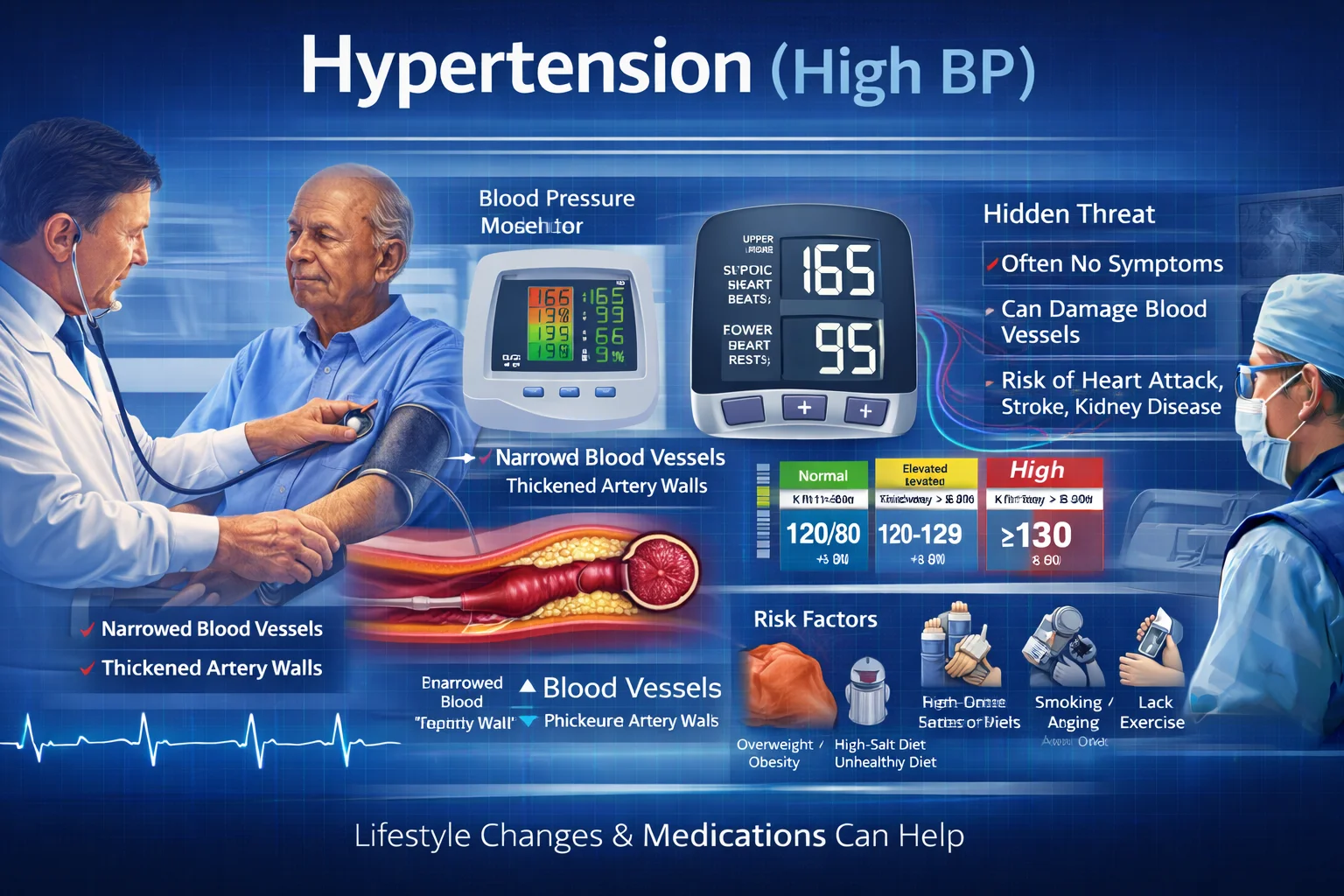
Hypertension, also known as high blood pressure, is a common yet serious health condition where the force of blood against the walls of your arteries is consistently too high. Over time, uncontrolled hypertension can cause significant damage to your heart, kidneys, eyes, and other organs. Early detection and management are key to preventing complications such as heart disease, stroke, and kidney failure.
Hypertension occurs when the blood pressure in your arteries is consistently high. Blood pressure is measured using two readings:
Systolic Pressure: The pressure when your heart beats and pumps blood.
Diastolic Pressure: The pressure when your heart is at rest between beats.
A normal blood pressure reading is typically around 120/80 mm Hg. Hypertension is diagnosed when your blood pressure consistently reads at or above 130/80 mm Hg.
If left uncontrolled, hypertension can lead to serious health issues, including:
Heart Disease: Over time, high blood pressure can cause the heart to work harder than normal, leading to heart failure or coronary artery disease.
Stroke: High blood pressure is a leading cause of stroke, as it can cause the arteries leading to the brain to become weakened or blocked.
Kidney Disease: Hypertension can damage the blood vessels in the kidneys, potentially leading to kidney failure.
Vision Loss: High blood pressure can damage the blood vessels in the eyes, leading to vision problems or even blindness.
Aneurysms: Prolonged high blood pressure can lead to the formation of aneurysms, or bulges in the blood vessels, which can rupture and cause life-threatening complications.
Several factors can increase your risk of developing high blood pressure:
Age: The risk of hypertension increases with age.
Family History: A family history of hypertension can make you more likely to develop it.
Obesity: Excess weight puts extra strain on the heart and arteries, increasing the risk of hypertension.
Sedentary Lifestyle: Lack of physical activity can contribute to weight gain and higher blood pressure.
Diet: Diets high in salt, processed foods, and unhealthy fats increase the likelihood of developing hypertension.
Excessive Alcohol Consumption: Drinking large amounts of alcohol can raise blood pressure.
Smoking: Smoking damages blood vessels, causing an increase in blood pressure.
Chronic Stress: Prolonged stress can contribute to high blood pressure.
Hypertension is often referred to as the “silent killer” because it typically has no noticeable symptoms. However, in severe cases or when blood pressure reaches dangerously high levels, symptoms may include:
Headaches
Dizziness
Shortness of breath
Chest pain
Vision problems
Fatigue
It’s important to monitor your blood pressure regularly, even if you feel fine, as high blood pressure can develop without any noticeable symptoms.
Hypertension is diagnosed by regularly measuring blood pressure using a blood pressure cuff. A single high reading is not enough to diagnose hypertension. Doctors typically require multiple readings over time to confirm the diagnosis.
Home Blood Pressure Monitoring: Checking blood pressure at home can help track your levels and provide more accurate results.
Ambulatory Blood Pressure Monitoring: In some cases, your doctor may recommend a 24-hour blood pressure monitor to get a more detailed view of your blood pressure throughout the day.
Managing hypertension typically involves a combination of lifestyle changes and medications:
Lifestyle Changes:
Healthy Diet: A diet low in sodium, rich in fruits, vegetables, and lean proteins, can help lower blood pressure.
Regular Exercise: Aim for at least 30 minutes of moderate exercise most days of the week.
Weight Management: Maintaining a healthy weight can help reduce the strain on your heart and arteries.
Limiting Alcohol: Reducing alcohol intake helps lower blood pressure.
Quit Smoking: Smoking cessation reduces the risk of complications related to high blood pressure.
Stress Management: Relaxation techniques such as yoga, meditation, and deep breathing can help reduce stress and lower blood pressure.
Medications:
Diuretics: Help remove excess salt and water from the body, which can lower blood pressure.
ACE Inhibitors: Help relax blood vessels by blocking certain hormones that narrow them.
Beta-blockers: Reduce heart rate and the force of heart contractions to lower blood pressure.
Calcium Channel Blockers: Help relax blood vessels and reduce the heart rate.
Angiotensin II Receptor Blockers (ARBs): Help relax blood vessels and improve blood flow.
While some risk factors like age and genetics cannot be controlled, there are several lifestyle changes that can reduce the risk of developing high blood pressure:
Healthy Diet: A balanced diet low in sodium and rich in potassium, magnesium, and fiber can help prevent hypertension.
Exercise: Regular physical activity helps keep blood pressure within a healthy range.
Stress Reduction: Finding ways to manage stress through activities like meditation, mindfulness, or exercise is essential.
Avoid Tobacco and Excessive Alcohol: Limiting smoking and alcohol intake helps lower the risk of hypertension.
If you have been diagnosed with hypertension or are experiencing symptoms like headaches, dizziness, or chest pain, schedule an appointment today. Managing blood pressure early can prevent complications like heart disease and stroke. Call us at +91 8904666442 to book your consultation and take control of your heart health.



Consultant Interventional Cardiologist
MBBS, MD, DM, FICC, FSCAI (USA)