JP Nagar, Bangalore-78
+91 89046 66442 | 88822 61858
Morning: 8:00 AM – 9:00 AM | Evening: 5:30 PM – 9:00 PM
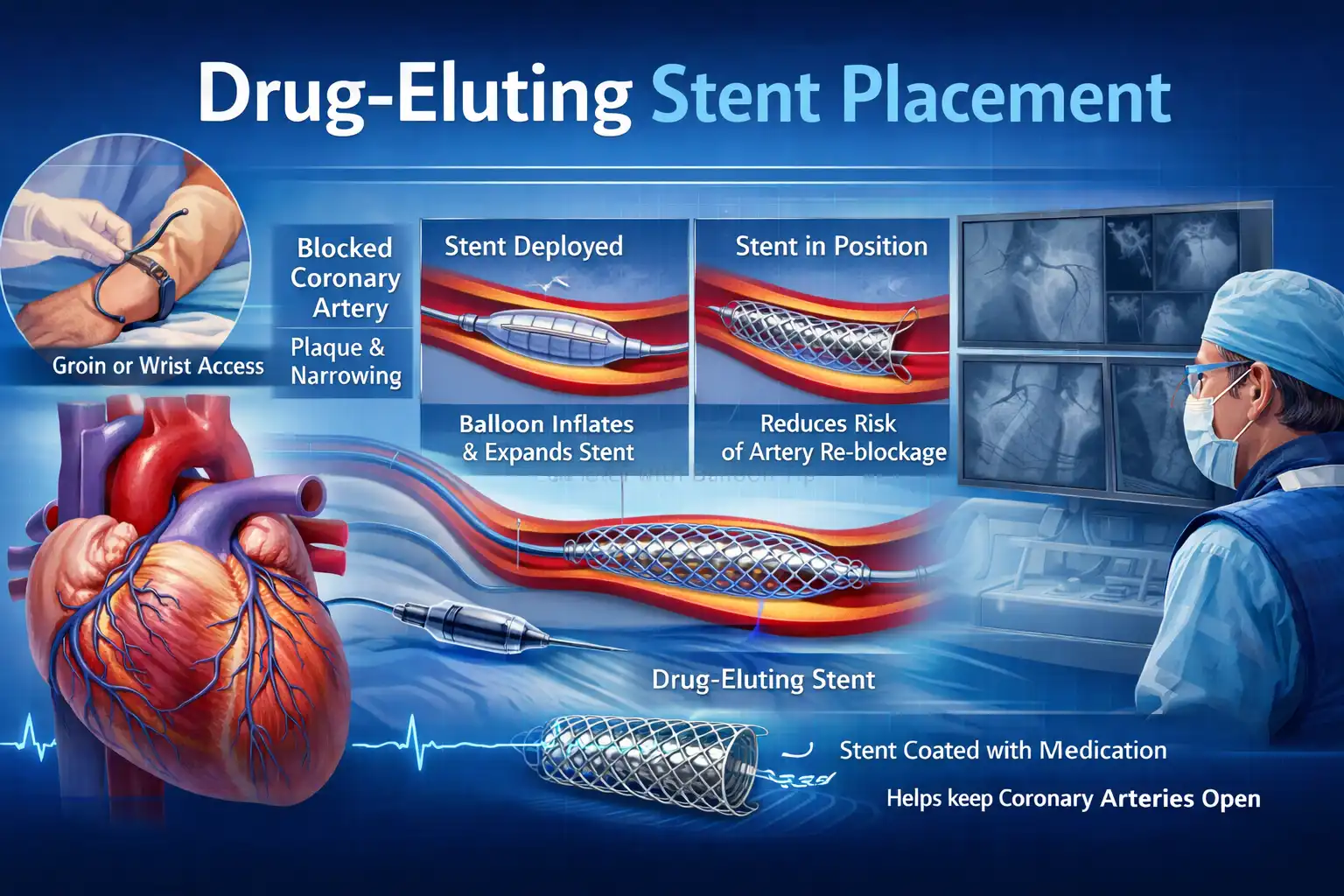
When coronary artery disease (CAD) causes blockages in the arteries that supply blood to the heart, it can lead to serious health issues, including chest pain, shortness of breath, and heart attacks. A drug-eluting stent placement is a highly effective procedure designed to open blocked arteries and improve blood flow, while also preventing the artery from narrowing again. This advanced procedure offers patients a modern, long-term solution for managing coronary artery disease.
A drug-eluting stent (DES) is a small mesh tube coated with medication that is inserted into a blocked or narrowed coronary artery to help keep it open. The stent not only physically propels the artery open but also slowly releases medication that prevents scar tissue from forming inside the artery, reducing the chance of the artery becoming blocked again (restenosis). This procedure is often used after coronary angioplasty (PTCA) to provide long-term results and reduce the likelihood of future heart problems.
Drug-eluting stents are the gold standard in treating coronary artery disease because they combine the physical benefit of keeping the artery open with the added benefit of drug therapy to reduce the risk of re-narrowing. They are particularly beneficial for patients with:
Complex blockages that are difficult to treat with angioplasty alone
Smaller arteries or multiple blockages
Previous history of stent re-narrowing
With drug-eluting stents, patients have a higher chance of long-term success and a lower risk of needing additional interventions.
Drug-eluting stents are recommended for patients who have:
Severe blockages in one or more coronary arteries that cannot be treated with medication alone
Experienced a heart attack and need to restore blood flow to the heart
Had a recurrence of symptoms (such as chest pain or shortness of breath) after undergoing an angioplasty or stent procedure
Blockages that could benefit from both mechanical expansion (via angioplasty) and the medication-delivery mechanism of a drug-eluting stent
If you have been diagnosed with coronary artery disease and your doctor suggests a drug-eluting stent, it’s because the stent offers a safe and effective solution to improve blood flow and reduce further complications.
The procedure begins with coronary angiography, where a catheter is inserted into the artery to locate the blockage. Once the blockage is identified, a balloon is used to open the artery (angioplasty), and a drug-eluting stent is carefully placed at the site of the blockage. The stent is expanded to fit snugly against the walls of the artery, ensuring it stays open. The medication embedded in the stent is then gradually released to help prevent the artery from re-closing.
The procedure typically lasts about 30 to 60 minutes and is done under local anesthesia. It is minimally invasive and most patients are able to return home the same day or after a short hospital stay.
Benefits of Drug-Eluting Stent Placement
Long-Term Relief: By keeping the artery open and releasing medication to prevent further blockages, drug-eluting stents provide a long-term solution to coronary artery disease.
Minimally Invasive: The procedure involves only a small incision, leading to a quicker recovery compared to open-heart surgery.
Reduced Risk of Restenosis: The drug coating on the stent helps reduce the formation of scar tissue inside the artery, minimizing the chances of re-narrowing.
Improved Quality of Life: Many patients experience significant relief from symptoms such as chest pain and shortness of breath, allowing them to return to daily activities more easily.
The placement of a drug-eluting stent is generally done as an outpatient procedure, meaning most patients can go home the same day or the next day. After the procedure, you will be monitored for a few hours to ensure that the stent is functioning properly and that there are no complications. You may need to take blood-thinning medications for a few months to prevent clot formation around the stent.
Recovery time is minimal, with most patients returning to normal activities within a week. However, some restrictions may apply, and follow-up appointments are essential to monitor the progress of your heart health.
Drug-eluting stent placement is a life-changing procedure for those suffering from coronary artery disease. It provides a modern, minimally invasive solution that not only restores blood flow to the heart but also reduces the risk of further complications. With a combination of mechanical support and medication, drug-eluting stents offer long-term relief, allowing you to focus on enjoying life with better heart health.
If you’re experiencing symptoms of coronary artery disease, or if you’ve been advised that a stent may be right for you, don’t wait. Schedule an appointment to discuss drug-eluting stent placement and how it can improve your heart health. Call us today at +91 8904666442 to book your consultation and take the first step toward better heart health.



Consultant Interventional Cardiologist
MBBS, MD, DM, FICC, FSCAI (USA)