JP Nagar, Bangalore-78
+91 89046 66442 | 88822 61858
Morning: 8:00 AM – 9:00 AM | Evening: 5:30 PM – 9:00 PM
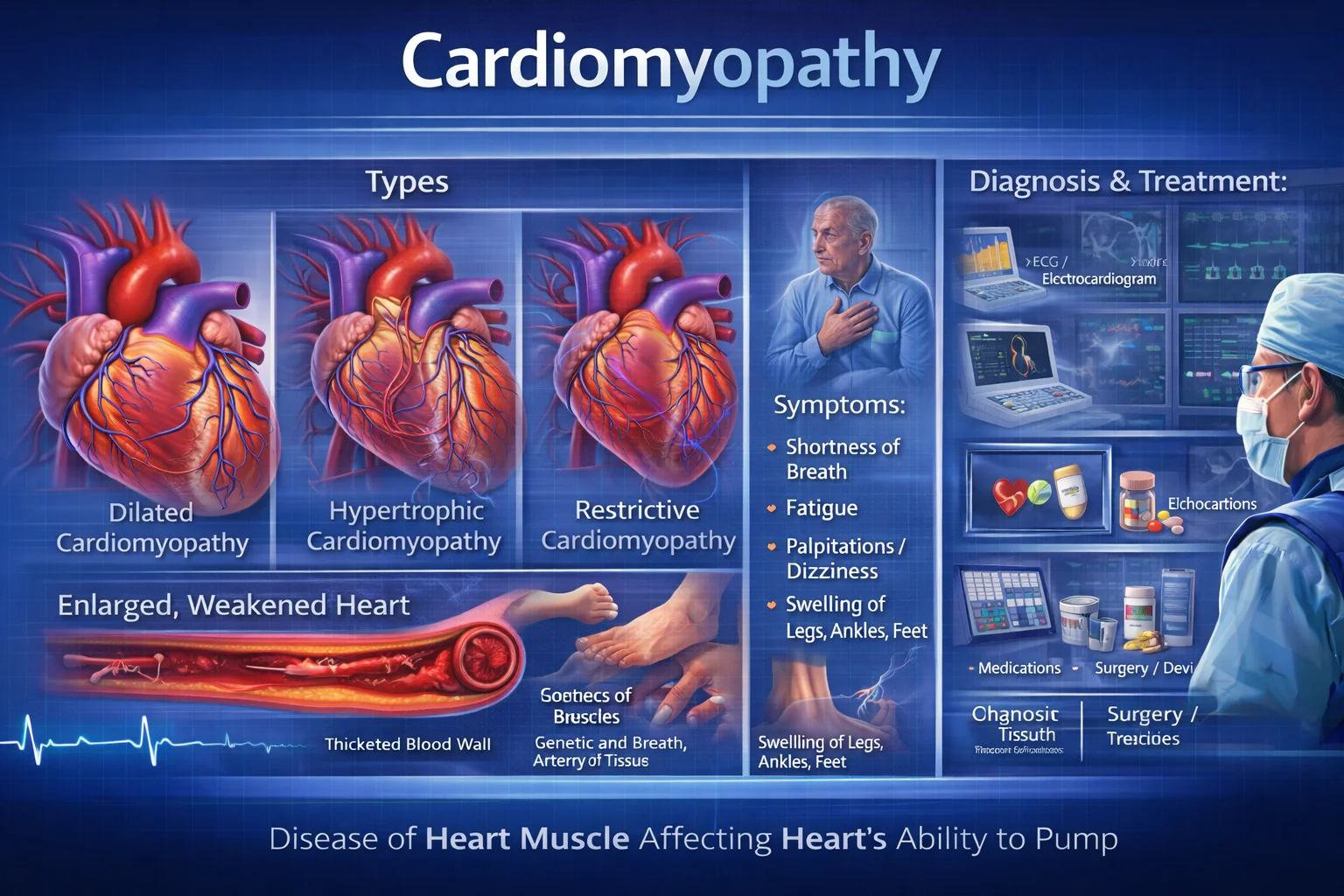
Cardiomyopathy is a condition where the heart muscle becomes weakened, thickened, or enlarged, affecting the heart’s ability to pump blood effectively. This can lead to heart failure, arrhythmias, and other serious heart complications. Cardiomyopathy can develop due to a variety of causes, including genetic factors, high blood pressure, and other underlying conditions. Early diagnosis and proper management are crucial in preventing further heart damage and improving quality of life.
Cardiomyopathy refers to a disease of the heart muscle that leads to changes in the size, shape, and function of the heart. As the heart muscle weakens, the heart struggles to pump blood efficiently to the rest of the body. There are several types of cardiomyopathy, including:
Dilated Cardiomyopathy: The heart’s chambers enlarge, and the heart muscle weakens, reducing its ability to pump blood.
Hypertrophic Cardiomyopathy: The heart muscle thickens, making it harder for the heart to pump blood.
Restrictive Cardiomyopathy: The heart muscle becomes rigid and less able to expand and contract properly.
Arrhythmogenic Right Ventricular Cardiomyopathy: The heart muscle in the right ventricle is replaced by fatty tissue, leading to arrhythmias and weakening of the heart.
Cardiomyopathy can lead to several serious complications, including:
Heart Failure: As the heart’s ability to pump blood weakens, the body does not get enough oxygen and nutrients.
Arrhythmias: Cardiomyopathy can cause abnormal heart rhythms, which may lead to sudden cardiac arrest if left untreated.
Blood Clots: Poor blood flow increases the risk of blood clots, which can travel to other parts of the body, leading to stroke or organ damage.
Heart Valve Problems: Cardiomyopathy can cause the heart valves to become leaky or unable to function properly, leading to further complications.
Several factors can increase the risk of developing cardiomyopathy, including:
Family History: Genetics can play a significant role in the development of certain types of cardiomyopathy.
High Blood Pressure: Uncontrolled high blood pressure can lead to the thickening of the heart muscle (hypertrophic cardiomyopathy).
Heart Attack: Previous heart attacks can damage the heart muscle and lead to dilated cardiomyopathy.
Diabetes: High blood sugar can contribute to the development of cardiomyopathy.
Alcohol Abuse: Long-term excessive alcohol consumption can weaken the heart muscle, leading to dilated cardiomyopathy.
Viral Infections: Certain viruses can infect the heart muscle, leading to inflammation and cardiomyopathy.
Obesity: Being overweight can increase the strain on the heart, contributing to the development of cardiomyopathy.
Symptoms of cardiomyopathy can vary depending on the type and severity of the condition but commonly include:
Shortness of Breath: Difficulty breathing during physical activity or even while at rest due to reduced heart function.
Fatigue: Unusual tiredness and weakness, especially during physical exertion.
Swelling: Fluid buildup in the legs, ankles, feet, or abdomen due to poor circulation.
Irregular Heartbeat: A feeling of fluttering or racing heartbeats (palpitations).
Dizziness or Fainting: Caused by inadequate blood flow to the brain.
Chest Pain: Discomfort or pain in the chest, especially during physical activity or stress.
If you experience any of these symptoms, it’s important to seek medical attention promptly.
Diagnosing cardiomyopathy typically involves a combination of medical history, physical examinations, and diagnostic tests:
Electrocardiogram (ECG): A test that records the electrical activity of the heart, helping detect arrhythmias or other abnormal heart rhythms.
Echocardiogram: An ultrasound of the heart that provides detailed images of the heart’s size, shape, and function.
Chest X-Ray: Used to check for heart enlargement or fluid buildup in the lungs.
MRI (Magnetic Resonance Imaging): Provides detailed images of the heart muscle and can help diagnose cardiomyopathy and assess its severity.
Blood Tests: Used to check for underlying conditions like diabetes or infections that may contribute to cardiomyopathy.
Genetic Testing: If hereditary cardiomyopathy is suspected, genetic testing may be performed to look for gene mutations that contribute to the condition.
The treatment for cardiomyopathy depends on the type, severity, and underlying causes of the condition. Common treatment options include:
Medications:
ACE Inhibitors: Help relax blood vessels and reduce the heart’s workload.
Beta-blockers: Slow the heart rate and reduce blood pressure to lessen the strain on the heart.
Diuretics: Help reduce fluid buildup in the body and ease the heart’s workload.
Blood Thinners: Reduce the risk of blood clots and stroke.
Antiarrhythmic Drugs: Used to control irregular heart rhythms.
Lifestyle Changes:
Low-Sodium Diet: Helps prevent fluid retention and reduces strain on the heart.
Exercise: Regular, moderate physical activity can improve heart function and overall health.
Limit Alcohol: Reducing alcohol consumption can help prevent further damage to the heart muscle.
Quit Smoking: Smoking cessation reduces the risk of further complications.
Medical Procedures:
Pacemaker: A device implanted to help regulate the heart’s rhythm and ensure it beats at a normal pace.
Implantable Cardioverter Defibrillator (ICD): A device that monitors the heart and delivers shocks if a dangerous arrhythmia is detected.
Heart Transplant: In severe cases where other treatments are ineffective, a heart transplant may be necessary.
While some forms of cardiomyopathy cannot be prevented, managing risk factors can help reduce the likelihood of developing the condition:
Control High Blood Pressure: Managing blood pressure helps prevent hypertrophic cardiomyopathy.
Limit Alcohol Consumption: Avoid excessive alcohol intake, which can damage the heart muscle.
Maintain a Healthy Weight: Preventing obesity reduces the strain on the heart.
Regular Check-ups: Routine check-ups with a healthcare provider can help identify potential problems early.
Manage Chronic Conditions: Control diabetes and other chronic diseases that can contribute to cardiomyopathy.
If you are experiencing symptoms like shortness of breath, fatigue, or swelling, or if you have a family history of heart disease, schedule a consultation with a specialist. Early diagnosis and treatment are vital in managing cardiomyopathy and improving heart function. Call us today at +91 8904666442 to book your appointment and take the first step toward a healthier heart.



Consultant Interventional Cardiologist
MBBS, MD, DM, FICC, FSCAI (USA)