JP Nagar, Bangalore-78
+91 89046 66442 | 88822 61858
Morning: 8:00 AM – 9:00 AM | Evening: 5:30 PM – 9:00 PM
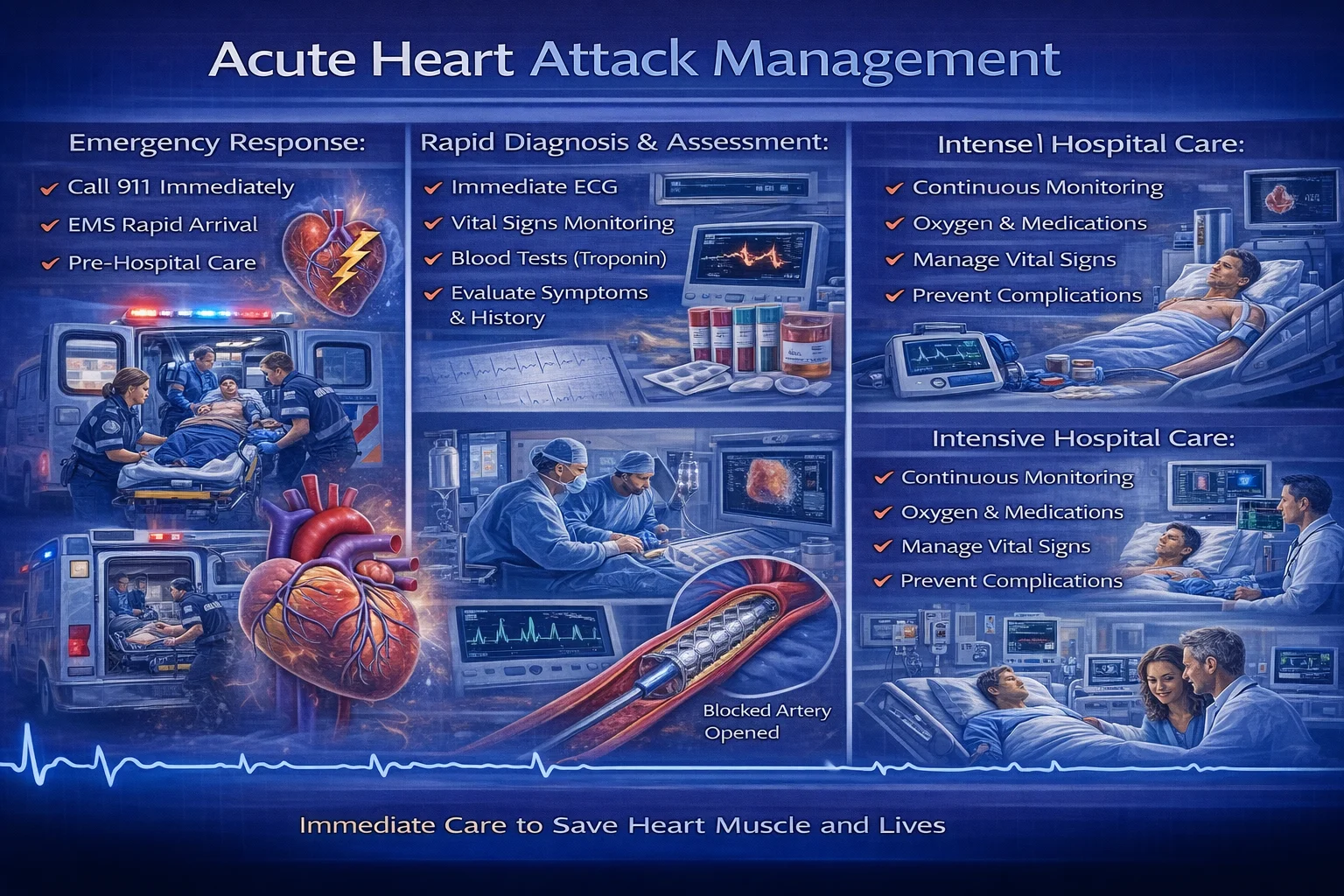
Acute heart attack, or myocardial infarction, occurs when blood flow to a part of the heart muscle is blocked, often by a blood clot. This blockage causes damage to the heart muscle, and without prompt treatment, it can lead to severe complications, including heart failure, arrhythmias, or even death. Acute heart attack management involves immediate medical intervention to restore blood flow, minimize heart muscle damage, and stabilize the patient’s condition. The goal is to provide life-saving care, reduce the extent of heart damage, and ensure a full recovery.
An acute heart attack occurs when one of the coronary arteries, which supply blood to the heart muscle, becomes blocked. This blockage prevents oxygen-rich blood from reaching the affected part of the heart, causing the heart muscle to become damaged or die. The blockage is usually caused by the rupture of a plaque in the artery, which triggers the formation of a blood clot. There are two main types of heart attacks:
ST-Elevation Myocardial Infarction (STEMI): A severe type of heart attack where the artery is completely blocked.
Non-ST-Elevation Myocardial Infarction (NSTEMI): A less severe heart attack where the artery is partially blocked, but blood flow is still reduced.
Immediate and effective management of an acute heart attack is critical for the following reasons:
Restoring Blood Flow: Rapid restoration of blood flow to the heart muscle helps minimize heart damage and improve survival chances.
Preventing Complications: Timely intervention reduces the risk of complications such as arrhythmias, heart failure, or shock.
Saving Heart Muscle: The faster the treatment, the more heart muscle can be preserved, improving long-term heart function and recovery.
Reducing Mortality: Prompt care significantly lowers the risk of death associated with heart attacks.
Recognizing the symptoms of a heart attack is essential for seeking prompt medical care. Common symptoms include:
Chest Pain: A feeling of tightness, pressure, or discomfort in the chest, often radiating to the left arm, neck, jaw, or back.
Shortness of Breath: Difficulty breathing, especially when accompanied by chest pain or discomfort.
Fatigue or Weakness: Unusual tiredness, even with minimal activity.
Nausea or Vomiting: Feeling sick to the stomach, sometimes accompanied by lightheadedness.
Cold Sweats: Sudden onset of cold, clammy sweat.
Dizziness or Lightheadedness: A feeling of fainting or dizziness, which may indicate poor blood circulation.
If you or someone else experiences these symptoms, it’s crucial to seek medical help immediately, as timely intervention is key to successful treatment.
The treatment of an acute heart attack involves several immediate steps to stabilize the patient and restore blood flow to the heart:
Call Emergency Services: If a heart attack is suspected, call for emergency medical help immediately. Time is crucial in reducing the severity of the attack.
Administration of Aspirin: If the patient is conscious, aspirin may be given to help prevent blood clotting and reduce the size of the clot.
Oxygen Therapy: Oxygen is administered to ensure the heart and other organs receive sufficient oxygen, especially if the heart is not pumping effectively.
Pain Management: Nitroglycerin or other medications may be given to relieve pain and relax the heart’s blood vessels, allowing better blood flow.
Monitoring: The patient’s vital signs, including heart rate, blood pressure, and oxygen levels, are closely monitored to detect any signs of complications.
Depending on the severity of the heart attack, several medical procedures may be used to restore blood flow and minimize damage:
Thrombolytic Therapy (Clot-Busting Drugs): If the heart attack is caused by a blood clot, clot-busting medications are administered intravenously to dissolve the clot and restore blood flow.
Percutaneous Coronary Intervention (PCI) or Angioplasty: This procedure involves the insertion of a catheter into the blocked artery to open it and restore blood flow. A balloon may be inflated to widen the artery, and a stent may be placed to keep the artery open.
Coronary Artery Bypass Grafting (CABG): In severe cases, bypass surgery may be necessary to reroute blood around the blocked arteries, improving blood flow to the heart.
After the acute phase of the heart attack is managed, post-care is crucial for recovery and preventing future heart problems:
Hospitalization: The patient will likely remain in the hospital for monitoring, including repeat blood tests, ECGs, and imaging studies.
Medications: Medications such as blood thinners, statins (to lower cholesterol), beta-blockers (to reduce the workload on the heart), and ACE inhibitors (to help relax blood vessels) will be prescribed.
Cardiac Rehabilitation: A supervised program of physical activity, stress management, and lifestyle education to help the patient regain strength and reduce the risk of future heart events.
Lifestyle Modifications: Patients will be advised to adopt heart-healthy lifestyle changes, including a balanced diet, regular exercise, quitting smoking, and managing stress.
Follow-Up Appointments: Regular follow-up visits with the cardiologist will help monitor heart function, assess recovery progress, and manage any complications.
Preventing future heart attacks is crucial for long-term health. Key components of long-term management include:
Blood Pressure and Cholesterol Management: Regular monitoring and treatment to control high blood pressure and cholesterol levels, which are major risk factors for heart disease.
Smoking Cessation: Quitting smoking is essential for preventing further damage to the heart and arteries.
Healthy Diet: A heart-healthy diet that is low in saturated fats, sodium, and cholesterol, while high in fruits, vegetables, whole grains, and lean proteins.
Regular Exercise: Engaging in regular physical activity to improve cardiovascular health and manage weight.
Weight Management: Maintaining a healthy weight helps reduce strain on the heart and lowers the risk of complications.
Medication Adherence: Ensuring that prescribed medications are taken as directed to prevent blood clots, control blood pressure, and improve overall heart function.
If you or someone you know is at risk for heart attack or has experienced symptoms of chest pain, shortness of breath, or fatigue, seek medical attention immediately. Early treatment can save lives and improve recovery outcomes. Call us at +91 8904666442 to schedule an appointment and discuss heart health with our expert cardiologists.



Consultant Interventional Cardiologist
MBBS, MD, DM, FICC, FSCAI (USA)