JP Nagar, Bangalore-78
+91 89046 66442 | 88822 61858
Morning: 8:00 AM – 9:00 AM | Evening: 5:30 PM – 9:00 PM
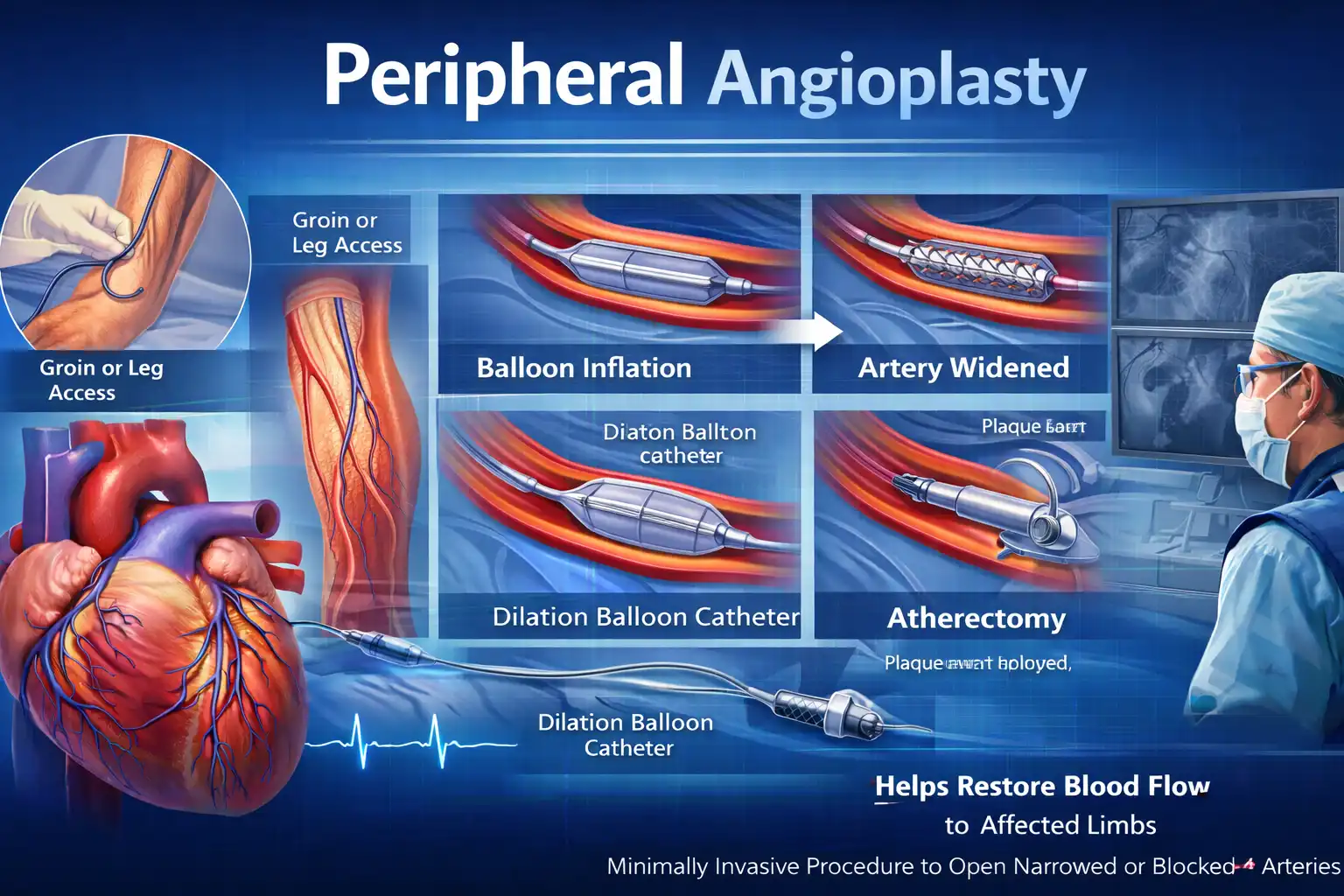
Peripheral artery disease (PAD) occurs when the blood vessels outside the heart and brain become narrowed or blocked, typically due to a buildup of plaque. This can lead to reduced blood flow to the limbs, causing pain, numbness, and in severe cases, the risk of limb amputation. Peripheral angioplasty is an advanced, minimally invasive procedure designed to treat PAD by restoring blood flow to the affected areas, helping improve circulation and quality of life.
Peripheral angioplasty is a catheter-based procedure used to treat narrowed or blocked arteries in the legs, arms, or other areas outside the heart. During this procedure, a catheter with a small balloon at its tip is inserted into the blocked artery. Once the catheter reaches the site of the blockage, the balloon is inflated, compressing the plaque and widening the artery to restore normal blood flow. In many cases, a stent is also placed to keep the artery open long-term, ensuring better circulation.
Peripheral angioplasty offers several advantages for patients suffering from peripheral artery disease:
Minimally Invasive: The procedure requires only small incisions and no major surgery, leading to less pain, fewer complications, and a quicker recovery compared to traditional surgical methods.
Effective and Long-Term Relief: Peripheral angioplasty can significantly improve blood flow to the limbs, reducing symptoms such as pain and cramping, and improving overall mobility.
Faster Recovery: Most patients experience a shorter recovery time, with many able to resume normal activities within a few days, compared to the prolonged recovery typically associated with open surgery.
Restores Mobility: The procedure can relieve symptoms like claudication (leg pain during exercise) and restore the ability to walk and move without discomfort.
Peripheral angioplasty is recommended for patients with:
Severe Peripheral Artery Disease (PAD): When blood flow to the legs or arms is significantly reduced due to narrowed or blocked arteries, causing symptoms like pain, cramping, or numbness.
Intermittent Claudication: When patients experience leg pain during exercise that improves with rest, indicating insufficient blood flow to the muscles.
Critical Limb Ischemia: When the lack of blood flow is severe, leading to rest pain, non-healing wounds, or ulcers on the limbs, which increases the risk of limb amputation.
Inability to Perform Daily Activities: When symptoms such as pain or fatigue prevent the patient from walking, exercising, or performing daily tasks.
If you are experiencing leg pain, cramps, or numbness, or have been diagnosed with peripheral artery disease, peripheral angioplasty may be the right option to restore blood flow and improve your quality of life.
The procedure begins with local anesthesia, and the catheter is inserted through a small incision, typically in the groin or wrist, and guided through the blood vessels to the blocked artery. Once the catheter reaches the blockage, a balloon is inflated, which helps open up the artery and compress the plaque. In many cases, a stent (a small metal mesh tube) is placed to keep the artery open and allow for long-term blood flow.
Peripheral angioplasty is usually performed in a specialized catheterization lab (also known as a cath lab) and typically lasts between 30 minutes to an hour, depending on the complexity of the blockage. After the procedure, patients are monitored for a short time to ensure there are no complications, and most can go home the same day or the next day.
Benefits of Peripheral Angioplasty
Restores Blood Flow: By widening the arteries, peripheral angioplasty improves blood circulation to the limbs, reducing symptoms like pain, numbness, and fatigue.
Minimally Invasive: The procedure involves small incisions and no need for major surgery, leading to less pain, fewer complications, and a faster recovery.
Reduced Risk of Amputation: By improving blood flow, peripheral angioplasty helps prevent the need for limb amputation in patients with severe PAD or critical limb ischemia.
Improved Mobility: Many patients experience relief from leg pain and cramping, allowing them to walk longer distances and engage in daily activities without discomfort.
The procedure is typically performed under local anesthesia and mild sedation. You will be awake but comfortable throughout the process. The catheter is inserted through a small incision, usually in the groin or wrist, and advanced to the site of the blockage. Once the artery is opened and the balloon is inflated, the procedure is complete.
After the procedure, you will be monitored for a few hours to ensure everything is stable. Most patients can go home the same day or the next day, and recovery is generally quick. You may experience some soreness or bruising at the insertion site, but this usually resolves within a few days. You’ll be advised to avoid strenuous activities for a few weeks and attend follow-up appointments to monitor the success of the procedure.
Peripheral angioplasty offers an effective, minimally invasive solution for treating peripheral artery disease. By restoring blood flow to the legs and other affected areas, this procedure improves mobility, reduces symptoms, and prevents serious complications like limb amputation. It is a life-changing treatment that helps patients regain their independence and quality of life.
If you are experiencing symptoms of peripheral artery disease or have been diagnosed with PAD, peripheral angioplasty could help restore your health and mobility. Contact us today to schedule a consultation and learn more about this advanced procedure. Call us at +91 8904666442 to book your appointment.



Consultant Interventional Cardiologist
MBBS, MD, DM, FICC, FSCAI (USA)