JP Nagar, Bangalore-78
+91 89046 66442 | 88822 61858
Morning: 8:00 AM – 9:00 AM | Evening: 5:30 PM – 9:00 PM
Introduction:
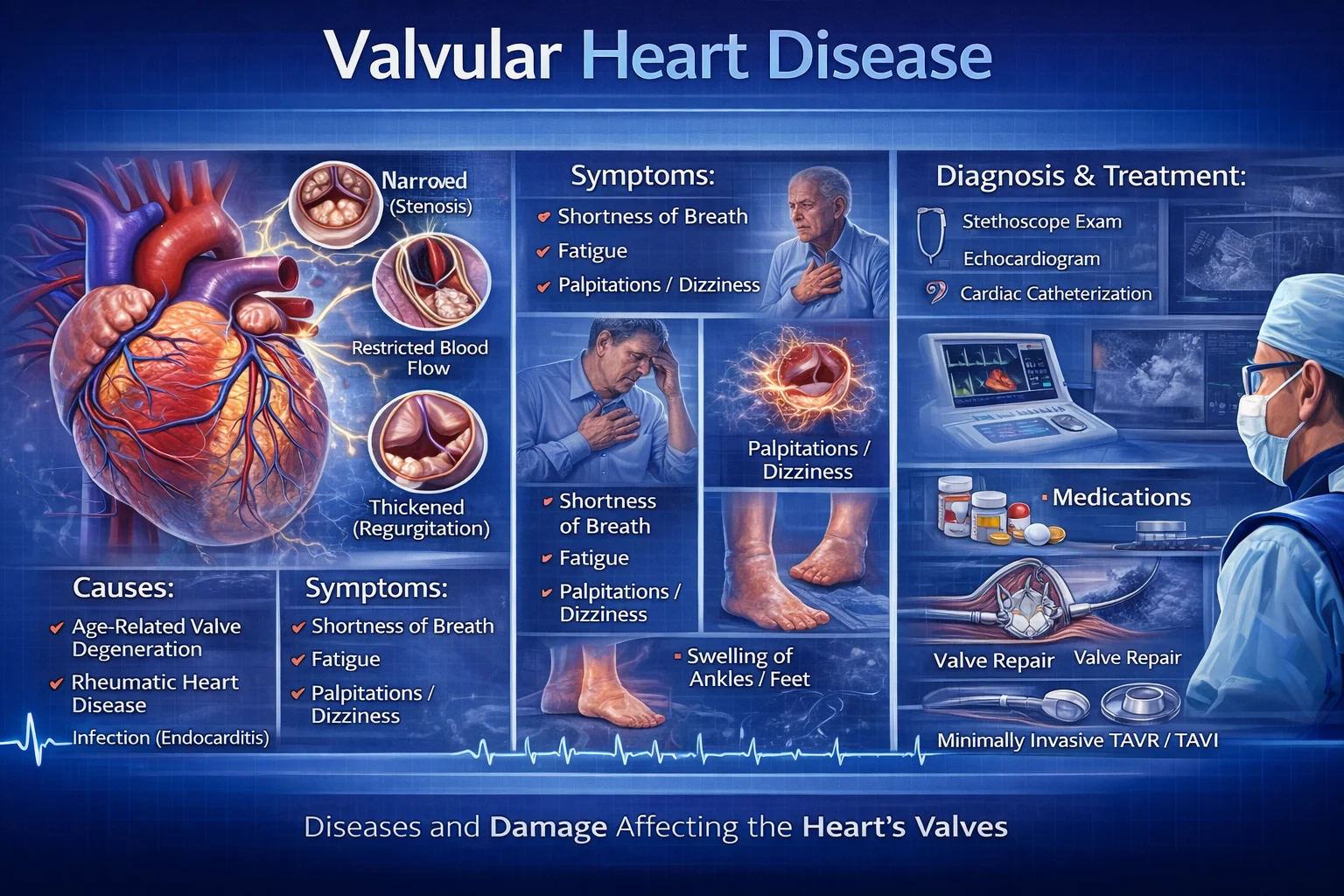
Valvular heart disease refers to any condition that affects one or more of the heart valves, which regulate blood flow through the heart. The heart has four valves—mitral, aortic, tricuspid, and pulmonary—that ensure blood flows in the right direction. When these valves are damaged or diseased, it can lead to problems with blood circulation and increase the risk of complications such as heart failure, arrhythmias, and stroke. Early diagnosis and appropriate treatment are crucial to managing valvular heart disease and preventing further complications.
What is Valvular Heart Disease?
Valvular heart disease occurs when one or more of the heart’s valves become damaged or do not function properly. This can involve:
Stenosis: When the valve becomes narrowed, preventing blood from flowing properly through the heart.
Regurgitation (or Insufficiency): When the valve fails to close completely, allowing blood to flow backward.
Prolapse: When the valve flaps do not close properly, often leading to regurgitation.
The damage to the valve(s) can occur due to congenital defects, age-related wear and tear, infections, or other heart conditions.
Why is Valvular Heart Disease Dangerous?
If left untreated, valvular heart disease can lead to serious complications such as:
Heart Failure: Over time, damaged valves can cause the heart to work harder, leading to heart failure where the heart cannot pump blood efficiently.
Arrhythmias: Irregular heartbeats can develop due to changes in the structure of the heart, increasing the risk of stroke and other complications.
Stroke: Blood flow problems caused by valvular disease can increase the risk of blood clots, which can travel to the brain and cause a stroke.
Pulmonary Hypertension: Damage to the heart valves can cause increased pressure in the lungs, leading to breathing difficulties and further heart complications.
Risk Factors for Valvular Heart Disease
Several factors can increase the risk of developing valvular heart disease, including:
Age: Older adults are more likely to develop valvular heart disease due to wear and tear on the valves.
Rheumatic Fever: A complication of untreated strep throat, rheumatic fever can cause scarring of the heart valves, leading to stenosis or regurgitation.
Congenital Defects: Some people are born with heart valve abnormalities that can lead to valvular disease later in life.
Infections: Infections like endocarditis can damage the heart valves.
High Blood Pressure: Chronic hypertension can lead to changes in the heart valves, particularly the aortic valve.
Marfan Syndrome: A genetic disorder that can affect the connective tissue in the heart, leading to valve problems.
Symptoms of Valvular Heart Disease
The symptoms of valvular heart disease can vary depending on the type of valve affected and the severity of the condition. Common symptoms include:
Shortness of Breath: Difficulty breathing, especially during physical activity or when lying flat.
Fatigue: Unusual tiredness, especially during exercise or physical exertion.
Swelling: Fluid buildup in the legs, ankles, or abdomen.
Chest Pain or Tightness: Pain or discomfort in the chest, particularly during physical activity.
Palpitations: The sensation of a racing or irregular heartbeat.
Dizziness or Fainting: Caused by reduced blood flow to the brain due to improper valve function.
If you experience any of these symptoms, it is essential to seek medical attention for evaluation and diagnosis.
Diagnosis of Valvular Heart Disease
Diagnosing valvular heart disease typically involves a combination of physical exams, imaging, and diagnostic tests:
Physical Examination: A doctor may listen for abnormal heart sounds (murmurs) or irregular heart rhythms, which may suggest a valve problem.
Echocardiogram: This ultrasound test provides detailed images of the heart and can show how well the heart valves are functioning.
Electrocardiogram (ECG): A test that records the electrical activity of the heart, helping detect any abnormal heart rhythms that may be caused by valvular disease.
Chest X-Ray: Can provide images of the heart’s size and any signs of valve damage or fluid buildup in the lungs.
Cardiac MRI: Offers detailed images of the heart valves and chambers, which can help assess the severity of the condition.
Cardiac Catheterization: A procedure in which a thin tube is inserted into the heart to measure blood pressure inside the chambers and assess the function of the valves.
Treatment Options for Valvular Heart Disease
Treatment for valvular heart disease depends on the type and severity of the valve problem. Common treatment options include:
Medications:
Diuretics: Help reduce fluid buildup in the body.
ACE Inhibitors: Relax blood vessels and reduce the heart’s workload.
Beta-blockers: Slow the heart rate and reduce blood pressure, improving the heart’s efficiency.
Anticoagulants (Blood Thinners): Help prevent blood clots from forming, reducing the risk of stroke.
Lifestyle Modifications:
Healthy Diet: A diet low in sodium and rich in fruits, vegetables, and whole grains helps control blood pressure and prevent fluid buildup.
Exercise: Regular, moderate physical activity can improve heart function and overall health.
Limit Alcohol: Excessive alcohol intake can worsen symptoms of valvular heart disease.
Quit Smoking: Smoking cessation is essential for heart health.
Surgical Treatments:
Valve Repair: In some cases, the affected valve can be repaired to restore normal function.
Valve Replacement: If the valve is severely damaged, it may need to be replaced with a mechanical or biological valve.
Percutaneous Valve Repair: A less invasive procedure where a catheter is used to repair or replace a valve, often for high-risk patients.
Prevention of Valvular Heart Disease
While valvular heart disease cannot always be prevented, managing risk factors and leading a heart-healthy lifestyle can reduce the likelihood of developing the condition:
Control High Blood Pressure: Properly managing hypertension reduces the strain on heart valves.
Treat Infections Promptly: Early treatment of infections like strep throat can help prevent rheumatic fever and valve damage.
Maintain a Healthy Weight: Reducing excess weight can help ease the strain on the heart.
Regular Check-ups: Regular visits to a healthcare provider for monitoring heart health and managing underlying conditions can help prevent valve problems.
Book an Appointment Today
If you are experiencing symptoms such as shortness of breath, chest pain, or fatigue, or if you have been diagnosed with valvular heart disease, schedule an appointment today. Early diagnosis and intervention are essential for managing heart valve problems effectively. Call us at +91 8904666442 to book your consultation and take the first step toward better heart health.



Consultant Interventional Cardiologist
MBBS, MD, DM, FICC, FSCAI (USA)