JP Nagar, Bangalore-78
+91 89046 66442 | 88822 61858
Morning: 8:00 AM – 9:00 AM | Evening: 5:30 PM – 9:00 PM
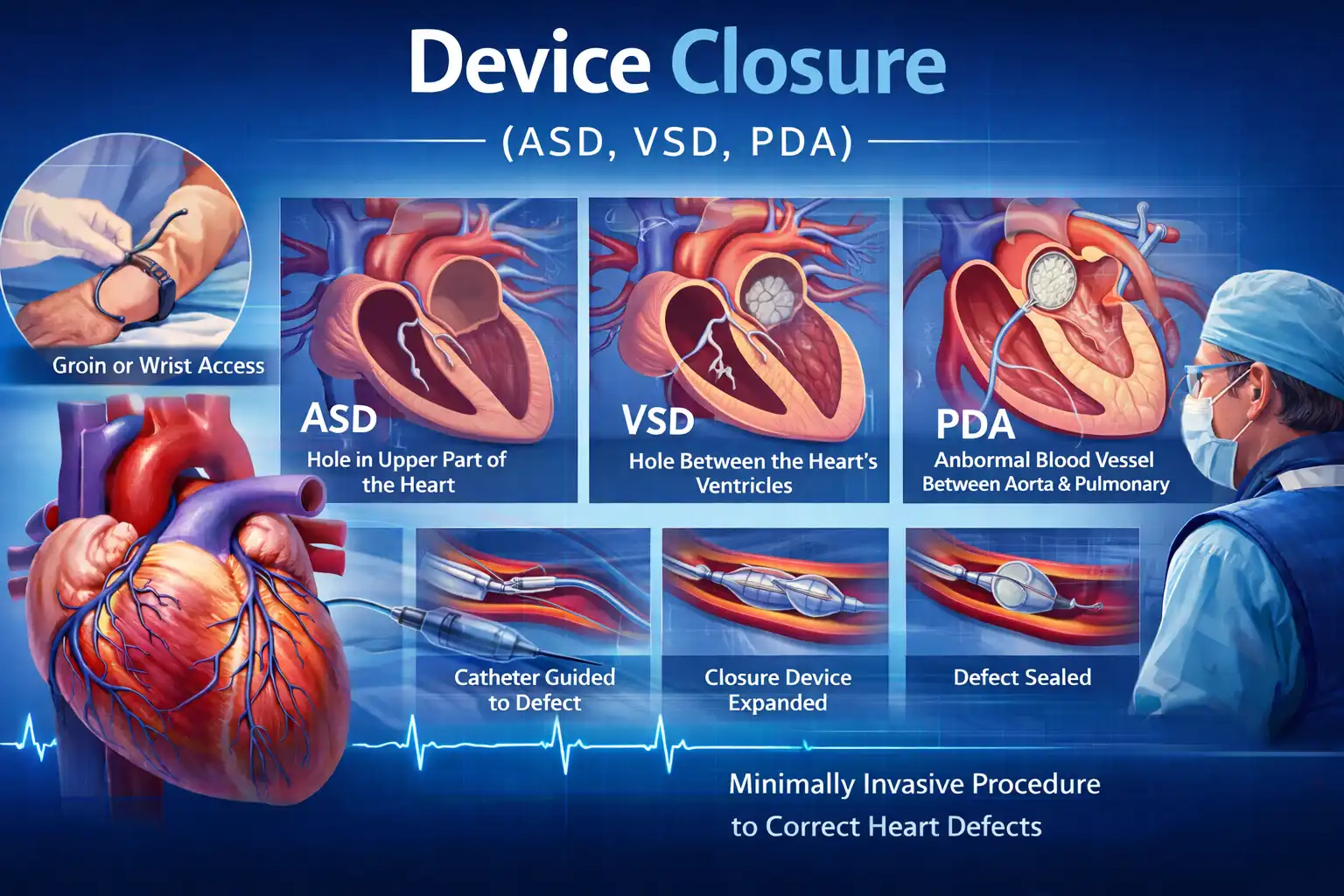
Congenital heart defects such as atrial septal defects (ASD), ventricular septal defects (VSD), and patent ductus arteriosus (PDA) can significantly affect the function of the heart if left untreated. These defects involve abnormal openings in the heart’s chambers or blood vessels, causing inefficient blood flow and increasing the risk of complications. Fortunately, with modern advancements in cardiology, these conditions can be treated effectively through device closure, a minimally invasive procedure that helps restore normal heart function.
Device closure is a non-surgical procedure used to close abnormal openings in the heart caused by congenital defects such as ASD, VSD, and PDA. A small, specially designed device (similar to a plug) is inserted into the heart through a catheter, where it is placed across the defect, sealing the hole and restoring normal blood flow. This technique is highly effective for closing these defects without the need for traditional open-heart surgery, offering patients quicker recovery times and fewer complications.
Types of Heart Defects Treated with Device Closure
Atrial Septal Defect (ASD)
ASD is a hole in the wall (septum) that divides the two upper chambers (atria) of the heart. Blood can flow abnormally between the atria, increasing the workload on the heart and lungs, potentially leading to complications like heart failure or stroke. Device closure for ASD involves placing a device to seal the hole, preventing blood from flowing between the chambers.
Ventricular Septal Defect (VSD)
VSD is a hole in the wall between the two lower chambers (ventricles) of the heart. This defect causes oxygen-rich blood to mix with oxygen-poor blood, reducing the efficiency of the heart’s pumping function. The device closure procedure helps seal the defect, restoring normal heart function.
Patent Ductus Arteriosus (PDA)
PDA occurs when a blood vessel that connects the pulmonary artery to the aorta fails to close after birth, causing abnormal blood flow between the two arteries. Device closure for PDA involves placing a small device into the vessel to block the abnormal blood flow and restore normal circulation.
Device closure is preferred over traditional open-heart surgery for several reasons:
Minimally Invasive: The procedure involves small incisions and does not require opening the chest, leading to less pain and faster recovery.
Faster Recovery: Most patients are able to return to normal activities within a few days, compared to the longer recovery time associated with surgery.
Lower Risk of Complications: As a catheter-based procedure, device closure carries fewer risks than traditional surgery, reducing the chance of infection and scarring.
Proven Effectiveness: Device closure has been proven to be highly effective in closing heart defects and improving heart function with minimal side effects.
Device closure is typically recommended for patients with the following conditions:
ASD: Persistent symptoms such as fatigue, shortness of breath, or recurrent respiratory infections; a large or symptomatic ASD; or when surgery is not recommended due to high risk.
VSD: Large VSDs that cause significant symptoms such as poor growth, frequent infections, or heart failure.
PDA: Persistent PDA that leads to abnormal blood flow and related complications like respiratory distress or heart failure.
If you or a loved one has been diagnosed with any of these conditions, device closure could be a safe and effective solution to restore normal heart function.
The procedure for device closure is performed in a specialized catheterization lab under local anesthesia and mild sedation. A catheter is inserted through a small incision, typically in the groin or wrist, and guided through the blood vessels to the heart. Once the catheter reaches the defect, a specially designed device is deployed and placed across the hole, where it expands to seal the defect. The device remains in place permanently, and over time, tissue grows over it, securing it within the heart.
The entire procedure usually takes between 30 minutes to an hour, depending on the complexity of the defect. After the procedure, patients are typically monitored for a few hours or overnight in the hospital, and most can return to their normal activities within a few days.
Benefits of Device Closure
Minimally Invasive: The procedure is performed through small incisions, which means less pain, faster recovery, and no need for a major surgery.
High Success Rate: Device closure has a high success rate in closing ASD, VSD, and PDA defects, offering long-term solutions for heart health.
Improved Heart Function: The procedure helps restore normal blood flow, improving heart function and reducing symptoms like shortness of breath, fatigue, and chest discomfort.
Quick Recovery: Most patients experience a quick recovery and can resume normal activities within a few days, with fewer hospital visits and a lower risk of complications.
During the procedure, you will receive local anesthesia to numb the insertion site, and mild sedation to help you relax. The procedure itself is minimally invasive, with small incisions and no need for major surgery. After the procedure, you will be monitored to ensure there are no complications. Most patients are able to go home the same day or the following day.
Recovery is typically quick, with many patients resuming normal activities within a few days. Your doctor will provide post-procedure instructions to help you recover fully, including any necessary follow-up visits to ensure the device is working effectively.
Device closure for ASD, VSD, and PDA offers an advanced, minimally invasive solution for patients with congenital heart defects. This procedure restores normal heart function, reduces symptoms, and improves the quality of life, all with a faster recovery time and lower risk of complications compared to traditional open-heart surgery.
If you or a loved one has been diagnosed with an ASD, VSD, or PDA, device closure could be the key to restoring your heart’s health. Contact us today to schedule a consultation and learn more about this advanced procedure. Call us at +91 8904666442 to book your appointment.


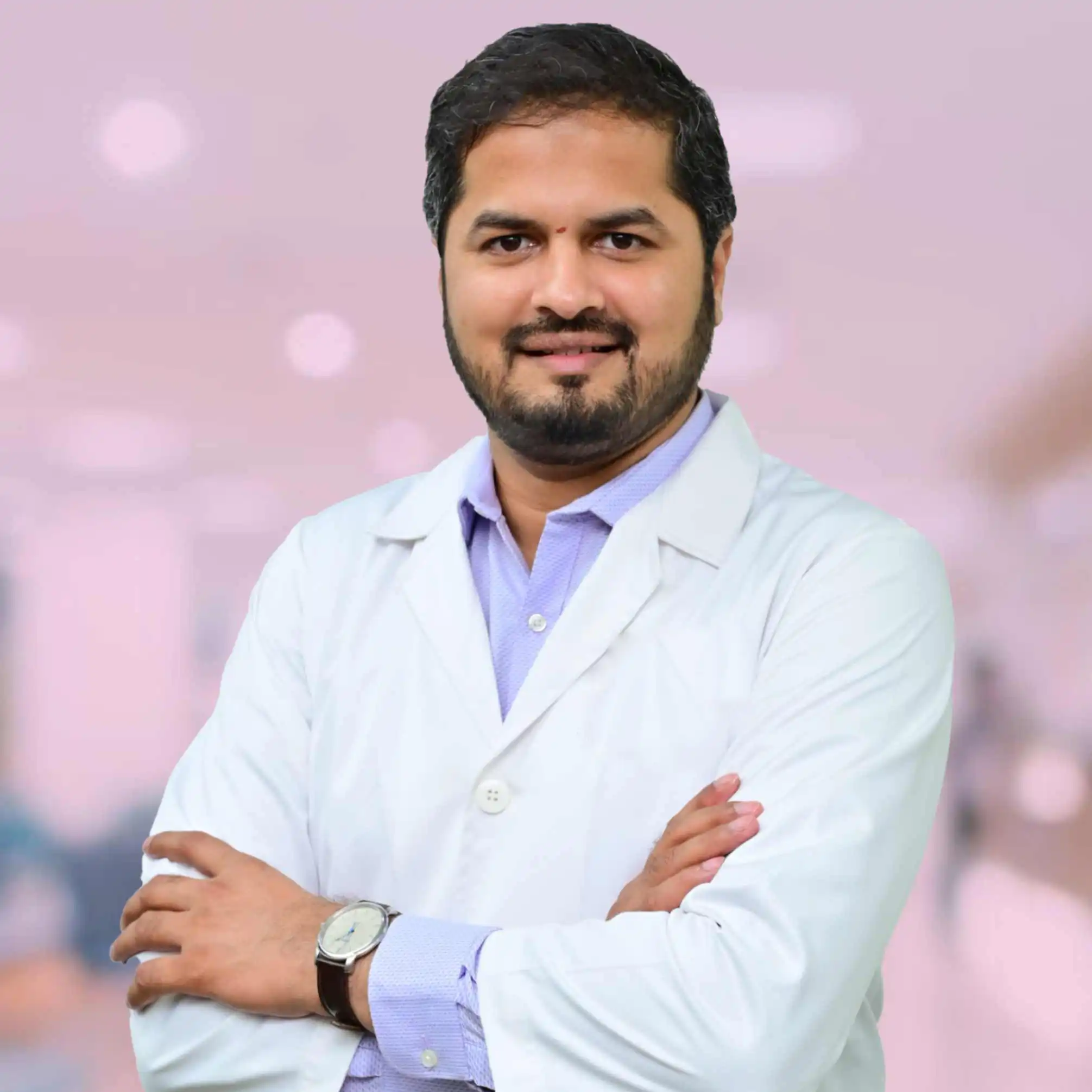
Consultant Interventional Cardiologist
MBBS, MD, DM, FICC, FSCAI (USA)