JP Nagar, Bangalore-78
+91 89046 66442 | 88822 61858
Morning: 8:00 AM – 9:00 AM | Evening: 5:30 PM – 9:00 PM
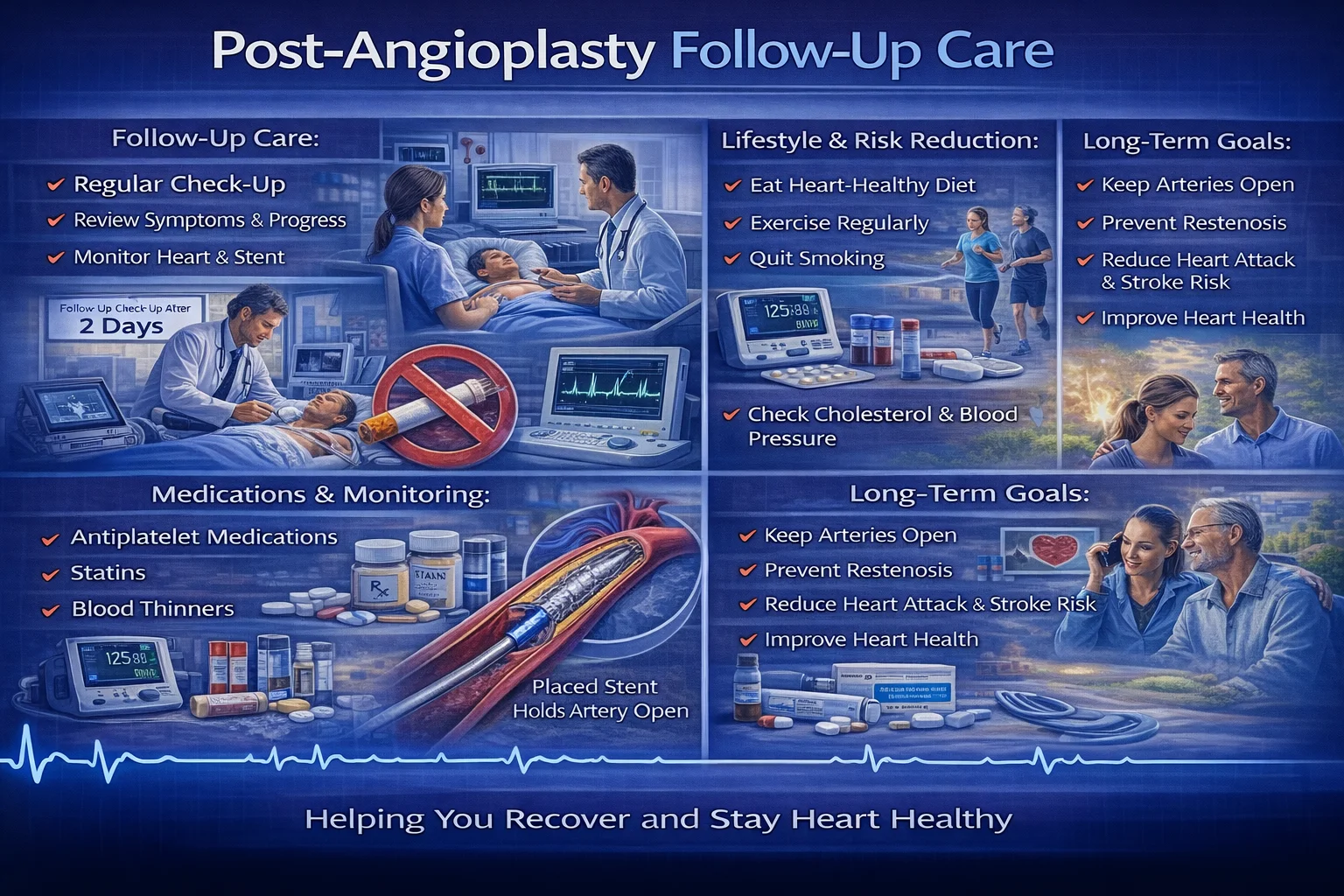
Post-angioplasty follow-up care is crucial for patients who have undergone angioplasty to ensure proper recovery, monitor heart health, and prevent future cardiovascular issues. Angioplasty, a procedure used to open blocked arteries, improves blood flow to the heart. However, continued medical attention and lifestyle adjustments are essential for a full recovery and to reduce the risk of further blockages. Post-angioplasty care involves regular check-ups, medications, lifestyle changes, and emotional support to ensure optimal heart health and prevent complications.
Post-angioplasty follow-up care refers to the ongoing medical care provided after a patient undergoes angioplasty (also known as percutaneous coronary intervention or PCI). After the procedure, patients are monitored to ensure that the heart is healing properly, the arteries remain open, and the risk of future cardiac events is minimized. Follow-up care typically includes regular check-ups with a cardiologist, medications, lifestyle changes, and specific recommendations to promote long-term heart health.
Follow-up care after angioplasty is essential for several reasons:
Ensuring Proper Recovery: Monitoring recovery ensures that the arteries remain open and that the heart is functioning optimally after the procedure.
Preventing Complications: Regular follow-up helps detect and address complications such as re-narrowing of the artery (restenosis), blood clots, or abnormal heart rhythms that may occur after angioplasty.
Managing Medications: Post-angioplasty patients are typically prescribed medications to prevent blood clots and manage heart health. Regular follow-up ensures the proper dosage and effectiveness of these medications.
Lifestyle Changes: A significant part of recovery is adopting heart-healthy habits, such as diet, exercise, and stress management, to prevent further cardiovascular problems.
Reducing Future Risks: Post-angioplasty care helps manage risk factors such as high blood pressure, high cholesterol, and diabetes, which could contribute to further blockages in the arteries.
Post-angioplasty follow-up care generally includes the following key components:
Medical Check-ups:
Cardiac Monitoring: Regular visits to your cardiologist for check-ups to monitor the function of the heart and assess any symptoms or concerns.
ECG or Echocardiogram: Tests to assess heart rhythm and function and ensure the heart is healing properly.
Blood Pressure Monitoring: Monitoring blood pressure is essential in preventing further cardiovascular issues.
Blood Tests: To check cholesterol, blood sugar, and kidney function, as well as to ensure medications are working effectively.
Medications:
Antiplatelet Therapy: After angioplasty, patients are often prescribed medications like aspirin or clopidogrel to prevent blood clots and reduce the risk of restenosis.
Statins: To lower cholesterol and reduce the risk of further plaque buildup in the arteries.
Beta-blockers or ACE Inhibitors: These medications help manage blood pressure and reduce the workload on the heart.
Diuretics: In some cases, diuretics are prescribed to reduce fluid buildup and ease the heart’s workload.
Post-angioplasty recovery requires significant lifestyle adjustments to prevent further cardiovascular problems:
Healthy Diet:
A heart-healthy diet is crucial for managing cholesterol, blood pressure, and weight. Focus on a diet rich in fruits, vegetables, whole grains, lean proteins, and healthy fats.
Limit salt intake, avoid trans fats, and reduce processed foods to support heart health.
Physical Activity:
Regular physical activity, such as walking or swimming, is essential to improve circulation, strengthen the heart, and manage weight. However, the intensity of exercise should be gradually increased based on the cardiologist’s advice.
Aim for at least 30 minutes of moderate exercise most days of the week.
Smoking Cessation:
If you smoke, quitting is one of the most important steps to prevent further heart damage and improve overall health.
Weight Management:
Maintaining a healthy weight reduces the strain on the heart and helps manage risk factors such as high cholesterol and high blood pressure.
Stress Management:
Practicing stress-relieving techniques such as yoga, meditation, or mindfulness can help reduce emotional stress, which can affect heart health.
After angioplasty, it’s important to stay alert to any symptoms that could indicate a problem:
Chest Pain or Discomfort: New or recurring chest pain could signal a problem with the heart or artery.
Shortness of Breath: Difficulty breathing or feeling winded, especially during physical activity, may indicate complications.
Fatigue or Weakness: Feeling unusually tired or weak, especially with minimal physical effort, could suggest issues with heart function.
Swelling: Swelling in the legs, ankles, or abdomen could be a sign of fluid retention or heart failure.
Irregular Heartbeat: New or unusual heart rhythms should be reported to your cardiologist immediately.
If you experience any of the following, seek medical attention immediately:
Severe chest pain or discomfort
Difficulty breathing or shortness of breath
Sudden dizziness, lightheadedness, or fainting
Swelling in the legs or abdomen
Unusual or rapid heartbeats
In addition to regular check-ups, long-term care includes maintaining the lifestyle changes mentioned earlier and staying in close contact with your healthcare provider. Rehabilitation programs, such as cardiac rehabilitation, are often recommended to provide structured support and guidance during recovery.
After angioplasty, follow-up care is essential for a successful recovery and long-term heart health. Our team of experts provides comprehensive post-angioplasty follow-up care, including regular monitoring, medication management, and lifestyle counseling to ensure a smooth recovery. Call us today at +91 8904666442 to schedule your follow-up appointment and take proactive steps in maintaining your heart health.



Consultant Interventional Cardiologist
MBBS, MD, DM, FICC, FSCAI (USA)