JP Nagar, Bangalore-78
+91 89046 66442 | 88822 61858
Morning: 8:00 AM – 9:00 AM | Evening: 5:30 PM – 9:00 PM
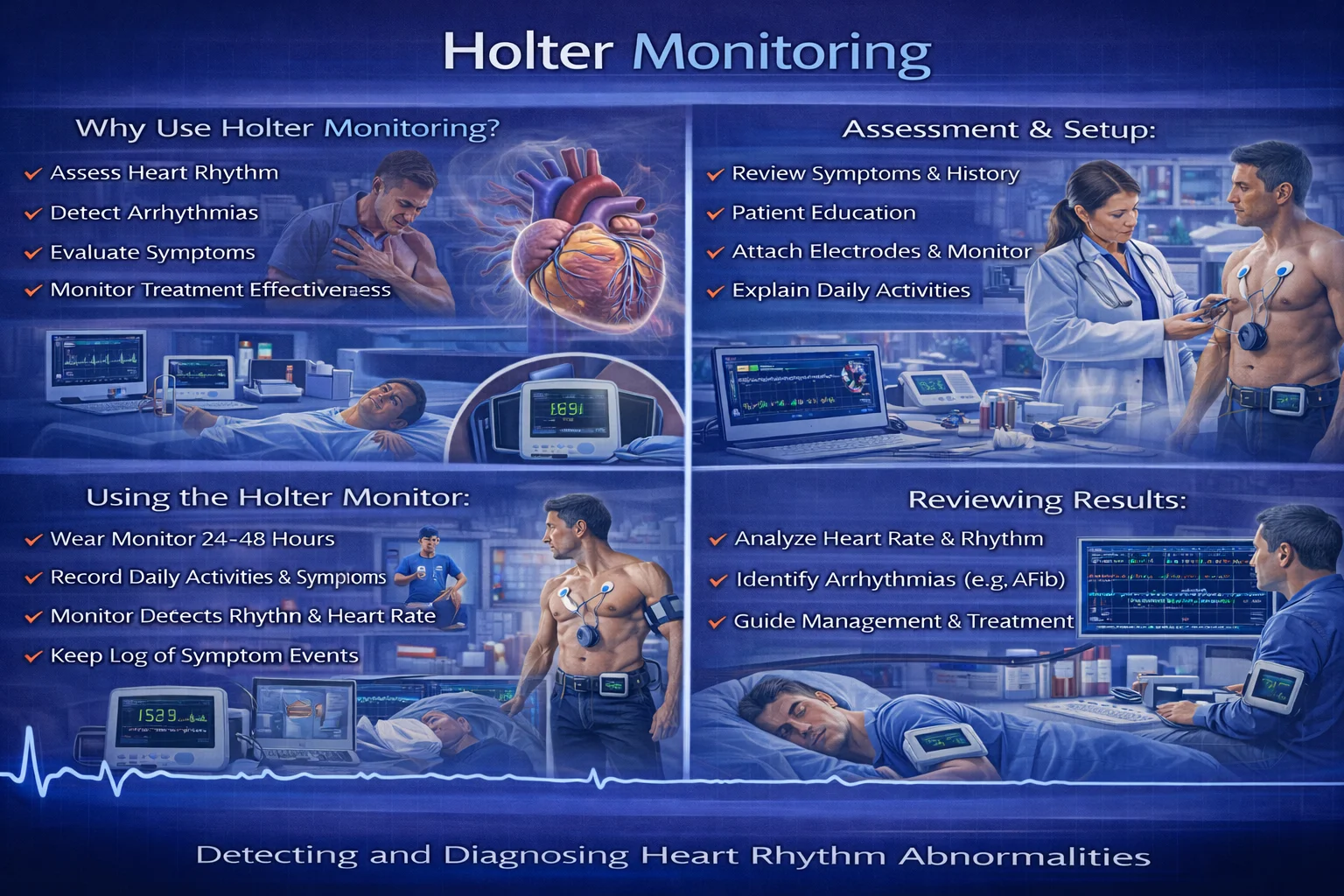
Holter monitoring is a non-invasive diagnostic test used to continuously monitor the electrical activity of the heart over an extended period, typically 24 to 48 hours. Unlike a standard electrocardiogram (ECG), which captures a snapshot of the heart’s electrical activity at a single point in time, Holter monitoring records heart activity continuously, providing valuable insights into the heart’s function during daily activities, sleep, and physical exertion. It is particularly useful for diagnosing irregular heart rhythms (arrhythmias) that may not be captured during a standard ECG.
Holter monitoring involves wearing a small, portable device that records the heart’s electrical activity throughout the day and night. The device, known as a Holter monitor, consists of small electrodes attached to the skin that are connected to the portable recorder. This monitor records the heart’s electrical signals, providing continuous data that can be analyzed to detect abnormal heart rhythms, heart rate variability, and other cardiac conditions.
Holter monitoring is typically used when a patient experiences symptoms like palpitations, dizziness, fainting, or unexplained chest pain that may indicate arrhythmias, but are not detected during a standard ECG test.
Holter monitoring is important for several reasons:
Diagnosis of Arrhythmias: Holter monitoring is particularly effective in diagnosing arrhythmias, including irregular heartbeats that may occur sporadically or in response to triggers like physical activity or stress.
Continuous Monitoring: Unlike a standard ECG, which records heart activity for a short period (usually 10 seconds), Holter monitoring captures heart activity over a full day or longer, providing a more complete picture of heart function.
Identifying Silent Arrhythmias: Some arrhythmias do not produce noticeable symptoms or occur infrequently, making them difficult to detect during a brief ECG. Holter monitoring captures these irregularities and helps identify potential risks.
Assessing Treatment Effectiveness: Holter monitoring can be used to evaluate how well treatments for arrhythmias or other heart conditions are working, allowing doctors to adjust medications if necessary.
Detecting Heart Rate Variability: Monitoring heart rate variability can provide insights into autonomic nervous system function and cardiovascular health.
Holter monitoring is typically recommended in the following situations:
Unexplained Palpitations: If you experience a sensation of a racing or fluttering heartbeat, Holter monitoring can help determine if an arrhythmia is the cause.
Dizziness or Fainting: Episodes of dizziness or fainting can sometimes be caused by abnormal heart rhythms. Holter monitoring helps detect any irregularities.
Chest Pain: If chest pain is suspected to be related to heart issues but not detected in an ECG, Holter monitoring may help identify the underlying cause.
Assessing the Effectiveness of Treatment: If you’re already being treated for heart disease or arrhythmias, Holter monitoring can help assess the effectiveness of your medications or procedures.
Heart Disease Risk: Individuals with a history of heart disease or other risk factors (such as high blood pressure or diabetes) may undergo Holter monitoring to detect any potential arrhythmias that may occur.
Holter monitoring typically involves the following process:
Initial Consultation: Your healthcare provider will evaluate your symptoms, medical history, and risk factors to determine if Holter monitoring is necessary.
Placement of Electrodes: Small, adhesive electrodes are placed on your chest to measure the electrical signals of your heart. These electrodes are connected to the Holter monitor, which is typically worn around your waist or over your shoulder.
Recording Period: You will wear the Holter monitor for 24 to 48 hours, during which time the device records your heart’s electrical activity continuously. During this time, it’s important to go about your normal activities, such as walking, eating, and sleeping. The monitor will record your heart’s response to various activities, including stress and physical exertion.
Data Collection: The Holter monitor will automatically store the recorded data, which will later be analyzed by a cardiologist.
Post-Monitoring: After the monitoring period, you will return the device to your healthcare provider, and the recorded data will be analyzed to detect any abnormalities or arrhythmias.
Holter monitoring provides several benefits for diagnosing and managing heart health:
Continuous, Real-Time Data: Unlike a single, brief ECG, Holter monitoring provides continuous data, offering a more accurate assessment of heart health over time.
Non-Invasive: Holter monitoring is completely non-invasive and does not require surgery or injections.
Convenient: The device is small, portable, and easy to wear, allowing you to continue your daily activities while monitoring your heart.
Accurate Diagnosis: It helps detect arrhythmias or heart conditions that might not show up in a standard ECG, providing valuable information for treatment decisions.
Improved Management of Heart Disease: Regular use of Holter monitoring can help manage chronic heart conditions by tracking the effectiveness of medications or lifestyle changes over time.
While Holter monitoring is generally safe, there are some considerations to keep in mind:
Skin Irritation: The adhesive electrodes may cause mild skin irritation or discomfort in some individuals.
Interference with Activities: The monitor may be bulky or uncomfortable for some people, especially if it interferes with activities like bathing or exercising.
Device Limitations: The device only records heart activity during the monitoring period. If symptoms do not occur during this time, they may not be detected.
Once the monitoring period is complete, your healthcare provider will analyze the data to detect any irregularities or heart rhythm issues. Depending on the results, the following may happen:
Treatment Adjustment: If an arrhythmia or other heart issue is detected, your doctor may adjust your treatment plan, which could include changes to medications, lifestyle modifications, or further testing.
Follow-up Visits: Additional follow-up visits may be scheduled to assess how well the treatment is working or to perform further diagnostic tests.
If you’re experiencing symptoms like palpitations, dizziness, or unexplained chest pain, Holter monitoring can provide valuable insights into your heart health. Contact us today at +91 8904666442 to schedule your Holter monitoring session and take the first step toward better heart health.



Consultant Interventional Cardiologist
MBBS, MD, DM, FICC, FSCAI (USA)