JP Nagar, Bangalore-78
+91 89046 66442 | 88822 61858
Morning: 8:00 AM – 9:00 AM | Evening: 5:30 PM – 9:00 PM
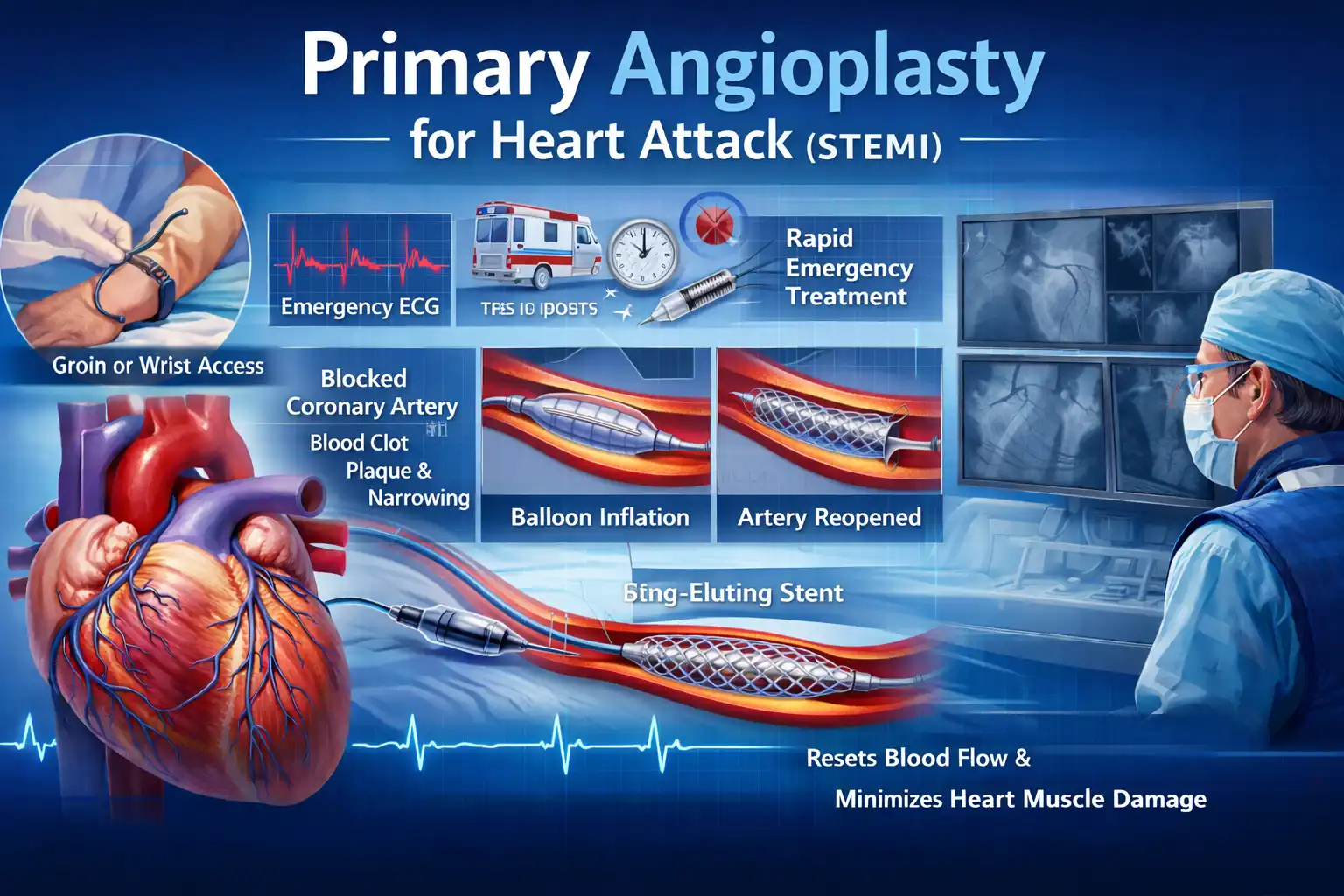
When a heart attack strikes, every second counts. A STEMI (ST-Elevation Myocardial Infarction) is one of the most severe types of heart attacks, where a blockage in one of the major arteries supplying blood to the heart can cause significant damage to the heart muscle. Primary angioplasty, also known as primary percutaneous coronary intervention (PCI), is a life-saving procedure used to restore blood flow to the heart during a STEMI, improving outcomes and preventing further heart damage.
Primary angioplasty is a procedure performed to treat patients experiencing a STEMI, the most critical form of heart attack. During a STEMI, a blood clot completely blocks one of the coronary arteries, halting the flow of oxygen-rich blood to a part of the heart. Primary angioplasty involves inserting a catheter into the blocked artery to remove or bypass the clot, restoring blood flow quickly. A stent may also be placed to keep the artery open and ensure long-term results.
This procedure is performed as an emergency intervention, ideally within 90 minutes of a STEMI diagnosis to minimize heart muscle damage and improve survival rates.
In the case of a STEMI, time is of the essence. Every minute that passes without restoring blood flow to the heart increases the risk of irreversible damage to the heart muscle. Primary angioplasty offers a fast, effective way to open up blocked arteries and limit the extent of damage. It is widely considered the best option for patients experiencing STEMI because it provides immediate relief and significantly improves the chances of a full recovery.
Primary angioplasty is typically recommended for patients experiencing a STEMI, which can be identified by:
Severe chest pain, often described as crushing or squeezing pain, typically lasting for several minutes
Pain radiating to the left arm, jaw, back, or neck
Shortness of breath, dizziness, or fainting
Sweating, nausea, or lightheadedness
If you experience any of these symptoms and suspect a heart attack, it’s critical to seek immediate medical help. Primary angioplasty is most effective when performed as soon as possible after the onset of a STEMI.
In the emergency setting, primary angioplasty is performed quickly in a catheterization lab (also known as a cath lab). A catheter is inserted through a small incision, typically in the groin or wrist, and threaded through the blood vessels to the site of the blockage in the coronary artery. Once the blockage is identified, the doctor may use a balloon to inflate and open the artery. In many cases, a stent is placed to keep the artery open and ensure continued blood flow to the heart.
The entire procedure is minimally invasive and can typically be completed within an hour, offering immediate restoration of blood flow.
Benefits of Primary Angioplasty for STEMI
Quick Restoration of Blood Flow: Primary angioplasty opens blocked arteries, rapidly restoring blood flow to the heart muscle, preventing further damage.
Reduced Heart Damage: By restoring blood flow promptly, primary angioplasty helps limit the extent of heart muscle injury and improves long-term heart function.
Higher Survival Rates: Research has shown that primary angioplasty has higher survival rates and better recovery outcomes compared to other treatments like thrombolytic (clot-busting) therapy.
Minimally Invasive: Primary angioplasty is a minimally invasive procedure, meaning smaller incisions, less pain, and faster recovery times compared to open-heart surgery.
Once the diagnosis of STEMI is confirmed, primary angioplasty is performed as an emergency procedure. You will be given local anesthesia to numb the area of insertion, and you may also receive a sedative to help you relax during the procedure. The procedure itself usually takes between 30 to 60 minutes, depending on the complexity of the blockage.
After the procedure, you will be closely monitored in the hospital for a few days to ensure there are no complications. You may need to take medications, including blood thinners, to prevent clotting around the stent and to promote healing. Most patients can return to normal activities within a few weeks, though you will need to follow up with your doctor for regular heart check-ups.
Primary angioplasty is one of the most critical interventions for patients suffering from a STEMI. It not only saves lives but also significantly improves the quality of life for survivors. By rapidly restoring blood flow to the heart, this procedure helps prevent long-term heart damage, improves heart function, and reduces the risk of future cardiac events.
If you or a loved one is at risk for heart disease or experiencing chest pain, don’t wait. Primary angioplasty is a vital tool in the early treatment of heart attacks. Schedule a consultation today to learn more about how we can help protect your heart. Call us at +91 8904666442 to book your appointment and ensure your heart stays healthy.



Consultant Interventional Cardiologist
MBBS, MD, DM, FICC, FSCAI (USA)