JP Nagar, Bangalore-78
+91 89046 66442 | 88822 61858
Morning: 8:00 AM – 9:00 AM | Evening: 5:30 PM – 9:00 PM
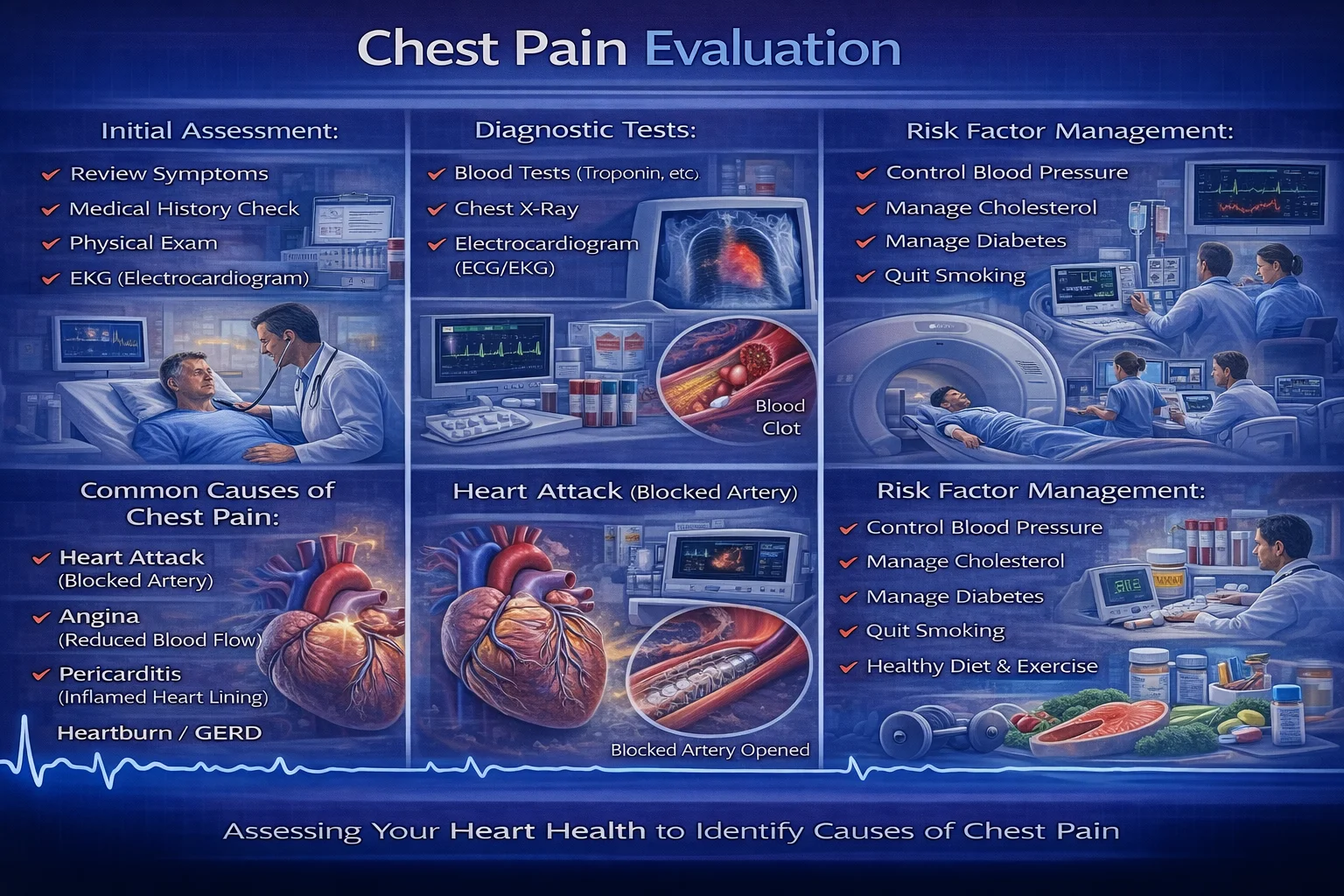
Chest pain is a common symptom that can range from mild discomfort to severe, life-threatening pain. While chest pain is often associated with heart problems, it can also result from various other conditions, such as digestive issues, muscle strain, or lung conditions. Chest pain evaluation is essential to determine the underlying cause, assess the severity, and recommend the appropriate treatment. Timely evaluation and diagnosis are crucial for identifying any serious health risks and ensuring proper care.
Chest pain evaluation is a series of tests, screenings, and assessments used by healthcare providers to diagnose the cause of chest pain. The evaluation typically involves gathering detailed information about the pain, conducting a physical examination, and performing diagnostic tests such as electrocardiograms (ECG), blood tests, imaging, and sometimes more specialized procedures. The goal is to rule out life-threatening conditions like heart attacks and identify any other possible causes of chest discomfort.
Chest pain evaluation is important for several reasons:
Identifying Heart-Related Issues: Chest pain can be a symptom of serious heart conditions, such as a heart attack, angina, or arrhythmias. Early diagnosis is crucial to prevent further complications.
Ruling Out Serious Conditions: While chest pain can be caused by minor issues, it can also indicate more serious conditions like pulmonary embolism, aortic dissection, or gastrointestinal issues that require immediate treatment.
Appropriate Treatment: Understanding the cause of chest pain allows healthcare providers to recommend the correct treatment, whether it’s lifestyle changes, medications, or procedures.
Preventing Complications: Early detection and intervention can prevent more severe complications, such as heart failure or chronic pain, and improve recovery outcomes.
Chest pain can be caused by a variety of conditions, both heart-related and non-heart-related:
Heart-Related Causes:
Heart Attack (Myocardial Infarction): A blockage in the coronary arteries that prevents blood from reaching the heart muscle, causing severe chest pain.
Angina: A type of chest pain that occurs when the heart muscle is not receiving enough oxygen-rich blood, often triggered by physical exertion or stress.
Pericarditis: Inflammation of the lining around the heart (the pericardium), causing sharp chest pain.
Aortic Dissection: A tear in the inner lining of the aorta, which can cause sudden, severe chest pain.
Arrhythmias: Abnormal heart rhythms can cause chest discomfort, palpitations, or shortness of breath.
Non-Heart-Related Causes:
Gastroesophageal Reflux Disease (GERD): Acid reflux can cause a burning sensation in the chest, often mistaken for heart-related pain.
Musculoskeletal Pain: Muscle strain or injury in the chest wall, ribs, or cartilage can cause localized chest pain, especially when breathing or moving.
Pulmonary Conditions: Conditions like pneumonia, pleuritis (inflammation of the lung lining), or pulmonary embolism (blood clot in the lungs) can cause chest pain.
Anxiety or Panic Attacks: Stress or anxiety can cause chest tightness, rapid heartbeat, and shortness of breath, mimicking heart-related symptoms.
Costochondritis: Inflammation of the cartilage connecting the ribs to the sternum, often causing chest discomfort or pain.
While chest pain can be a symptom of a benign condition, certain warning signs require immediate medical attention:
Severe Chest Pain: Intense, crushing, or tight chest pain, particularly if it radiates to the left arm, jaw, neck, or back, may indicate a heart attack.
Shortness of Breath: Difficulty breathing, especially when accompanied by chest pain, can indicate a heart or lung problem.
Pain with Sweating: Sudden sweating, especially cold sweats, accompanied by chest pain could be a sign of a heart attack or other severe condition.
Dizziness or Fainting: Chest pain with dizziness, lightheadedness, or fainting may indicate a cardiovascular or neurological emergency.
Pain That Worsens with Exercise: Chest pain that intensifies with physical activity or stress could indicate angina or another heart-related issue.
To determine the cause of chest pain, several tests and assessments may be performed:
Physical Exam: The doctor will ask about the characteristics of the pain (e.g., onset, location, intensity) and perform a physical exam to check for signs of heart disease, lung problems, or musculoskeletal issues.
Electrocardiogram (ECG): An ECG records the electrical activity of the heart and can help identify heart attacks, arrhythmias, or other heart conditions.
Blood Tests: Blood tests, including measuring troponin levels, help assess heart damage, especially in the case of a heart attack.
Chest X-ray: Provides images of the lungs and heart to rule out conditions like pneumonia, pulmonary embolism, or aortic dissection.
Echocardiogram: An ultrasound of the heart to assess heart function, valves, and blood flow.
Stress Test: A test where the heart is monitored during physical exertion to detect any heart-related issues that might not appear at rest.
CT Scan or MRI: More advanced imaging may be used to check for blockages, aortic dissection, or other heart and lung issues.
The treatment for chest pain depends on the underlying cause and severity:
Heart-Related Treatment:
Medications: Medications like aspirin, nitroglycerin, blood thinners, or pain relievers are used to treat heart-related chest pain.
Angioplasty or Surgery: If a blockage is found in the coronary arteries, procedures such as angioplasty or coronary artery bypass surgery (CABG) may be recommended.
Beta-blockers or ACE inhibitors: To manage heart function and prevent further damage.
Non-Heart-Related Treatment:
Antacids or PPIs: For chest pain caused by acid reflux or GERD.
Pain Relievers: For musculoskeletal pain, over-the-counter pain medications like ibuprofen or acetaminophen may be recommended.
Anxiety Management: Counseling, stress management, and medications for anxiety or panic disorders.
Preventing chest pain, particularly that caused by heart disease, involves managing risk factors:
Healthy Diet: A balanced diet low in saturated fats, cholesterol, and sodium helps prevent heart disease and other cardiovascular problems.
Regular Exercise: Physical activity strengthens the heart, improves circulation, and helps manage weight.
Smoking Cessation: Quitting smoking reduces the risk of heart disease and respiratory issues, both of which can contribute to chest pain.
Stress Management: Relaxation techniques such as yoga, meditation, and deep breathing can help reduce stress, a common cause of chest discomfort.
Regular Health Screenings: Regular check-ups for blood pressure, cholesterol, and blood sugar levels help manage risk factors for heart disease.
If you’re experiencing chest pain or discomfort, it’s important to seek prompt medical attention to determine the cause and receive the appropriate treatment. Our expert team is here to provide a thorough chest pain evaluation, ensuring timely diagnosis and effective treatment. Call us today at +91 8904666442 to book your consultation and take the first step toward better heart health.



Consultant Interventional Cardiologist
MBBS, MD, DM, FICC, FSCAI (USA)