JP Nagar, Bangalore-78
+91 89046 66442 | 88822 61858
Morning: 8:00 AM – 9:00 AM | Evening: 5:30 PM – 9:00 PM
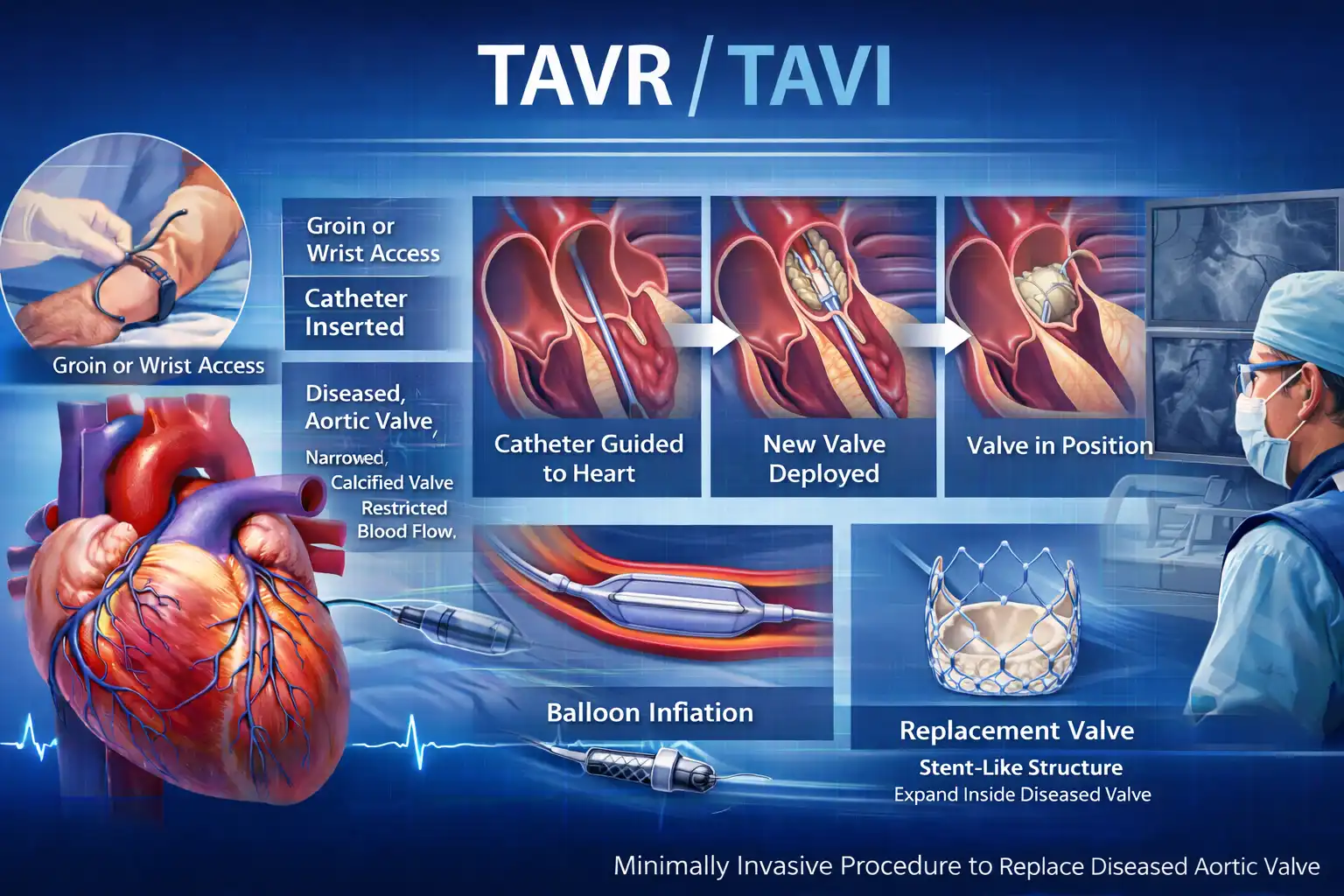
Aortic valve stenosis is a serious heart condition in which the aortic valve becomes narrowed, reducing blood flow from the heart to the rest of the body. As the heart works harder to pump blood through the narrowed valve, it can lead to symptoms like chest pain, shortness of breath, fatigue, and even heart failure. TAVR (Transcatheter Aortic Valve Replacement) or TAVI (Transcatheter Aortic Valve Implantation) is a revolutionary, minimally invasive procedure designed to treat aortic valve stenosis in patients who are not candidates for traditional open-heart surgery. This advanced procedure has transformed the way we treat aortic valve disease, offering a safer, quicker recovery for patients in need of valve replacement.
TAVR (also known as TAVI in some regions) is a cutting-edge procedure that replaces a diseased aortic valve with a new, functional valve without the need for open-heart surgery. Unlike traditional surgery, TAVR is performed through a catheter, typically inserted through the groin, although other access points may be used depending on the patient’s condition. The new valve is delivered to the heart via the catheter and positioned inside the existing, narrowed valve, which is then expanded to restore normal blood flow.
TAVR is particularly beneficial for patients who are at high or intermediate risk for surgery due to age, other health conditions, or complications from a weakened heart.
TAVR offers significant advantages for patients with aortic valve stenosis, particularly for those who may not be able to tolerate traditional open-heart surgery:
Minimally Invasive: The procedure requires only small incisions and no chest opening, leading to less pain, a shorter hospital stay, and a faster recovery compared to traditional valve replacement surgery.
Ideal for High-Risk Patients: TAVR is often the preferred option for elderly patients or those with other conditions that make open-heart surgery too risky.
Quicker Recovery: Because the procedure is minimally invasive, most patients experience a faster recovery, with many able to return to normal activities within a few weeks.
Improved Quality of Life: TAVR significantly improves the quality of life for patients by reducing symptoms such as fatigue, shortness of breath, and chest pain, while also restoring heart function.
TAVR is typically recommended for patients with:
Severe Aortic Valve Stenosis: When the aortic valve becomes severely narrowed, causing reduced blood flow to the body, and symptoms such as shortness of breath, chest pain, fatigue, or fainting.
High or Intermediate Surgical Risk: Patients who are not candidates for traditional open-heart surgery due to age, frailty, or other underlying health conditions.
Symptoms of Heart Failure: When aortic stenosis is causing heart failure or other related complications, and more invasive surgery is not a viable option.
Failed or Compromised Valve Replacement: For patients who have previously had heart valve surgery but now require a replacement or revision.
If you are suffering from aortic valve stenosis and have been told that surgery is too risky, TAVR may be a suitable option to restore your heart health and improve your quality of life.
The TAVR procedure is typically performed under local anesthesia and mild sedation. A catheter is inserted into a blood vessel, usually in the groin, and guided through the arteries to the heart. Once the catheter reaches the aortic valve, a balloon is inflated to expand the diseased valve, and the new valve is deployed over the old one. The new valve is then secured, and the catheter is removed.
The procedure typically takes between 1 to 2 hours and is performed in a specialized catheterization lab. After the procedure, patients are monitored in a recovery area for a few hours or overnight, depending on their overall condition.
Benefits of TAVR / TAVI
Minimally Invasive: Unlike traditional valve replacement surgery, TAVR involves small incisions and no chest opening, leading to less pain and a shorter recovery time.
Safer for High-Risk Patients: TAVR is often used for patients who cannot undergo traditional surgery due to high surgical risk factors such as age, frailty, or other health conditions.
Faster Recovery: Most patients experience a quicker recovery, with many able to return home within a few days and resume normal activities within weeks.
Improved Symptoms and Heart Function: TAVR significantly reduces symptoms such as shortness of breath, fatigue, and chest pain, while improving heart function and quality of life.
Before the procedure, you will be assessed thoroughly to ensure that you are a good candidate for TAVR. During the procedure, you will be awake but sedated. The catheter will be inserted into a blood vessel, typically in the groin or sometimes through the chest. The valve replacement procedure itself typically takes 1 to 2 hours, and you will be monitored closely afterward.
Most patients are able to return home within 1 to 2 days after the procedure. While the recovery time is relatively quick, you will need to avoid strenuous activities for several weeks. Regular follow-up appointments will be scheduled to monitor your progress and ensure the new valve is functioning properly.
TAVR / TAVI is a breakthrough treatment for patients suffering from severe aortic valve stenosis. This procedure provides a safe, minimally invasive alternative to traditional surgery, offering faster recovery, fewer complications, and long-term relief from symptoms. If you have been diagnosed with aortic valve stenosis and are unable to undergo open-heart surgery, TAVR could be the solution you need to restore heart function and improve your quality of life.
If you or a loved one has been diagnosed with aortic valve stenosis and is considering TAVR, schedule a consultation to learn more about this advanced procedure. Call us at +91 8904666442 to book your appointment and take the first step toward better heart health.



Consultant Interventional Cardiologist
MBBS, MD, DM, FICC, FSCAI (USA)